Learn the sequence of one trick
A player leads by playing the first card. Other players contribute in the required order, then the rules identify the winner. That player collects or otherwise resolves the trick, and often leads the next one. Check each of those steps in the game you are learning; exceptions are common enough that familiar habits can mislead.
Keep played cards in front of their owners until the winner is clear. This helps everyone see the order and verify whether the correct suit was followed. Only gather the trick after any relevant scoring or objective check. Sweeping cards away immediately can make a rules question unnecessarily difficult to reconstruct.
Understand following suit
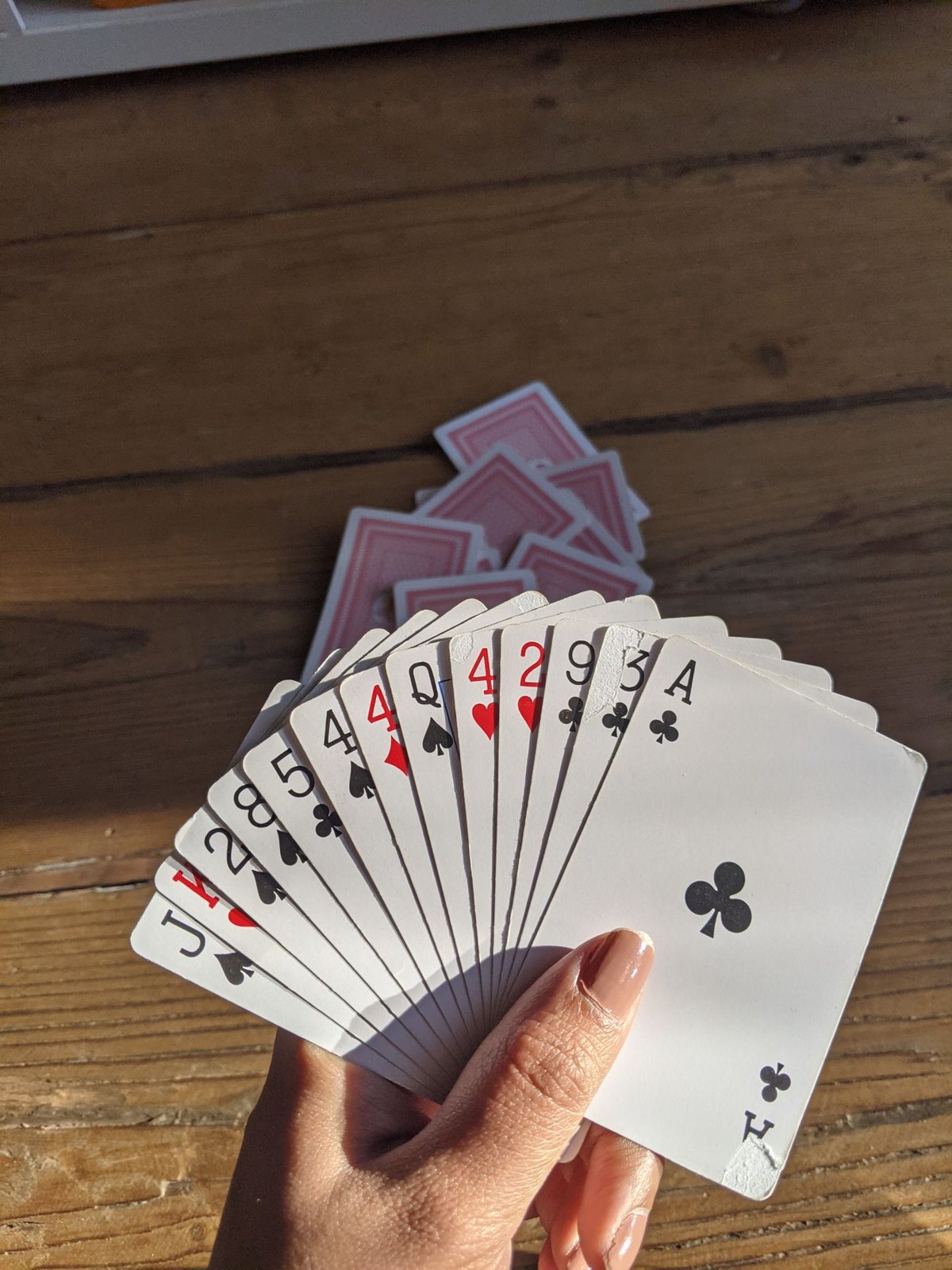
Many trick-taking games require a player who has a card in the led suit to play that suit. If you cannot follow, you may be allowed to play another suit, but what that card can accomplish depends on the rules. A high number in an unrelated suit does not automatically beat a lower card in the led suit.
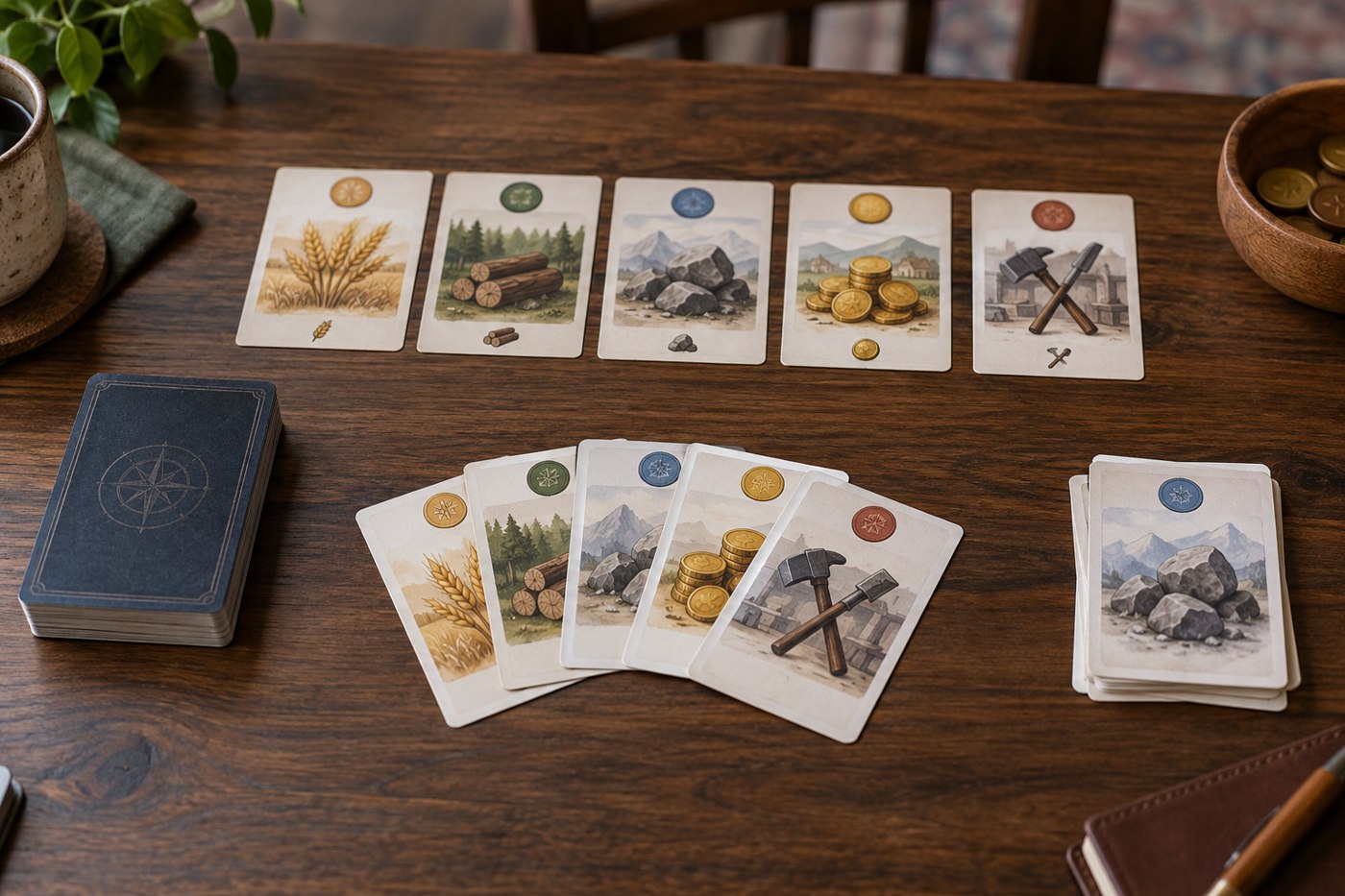
For an illustrative trick, suppose the lead is a blue five and all players must follow blue if able. A blue eight might beat it, while a red nine may not be eligible to win at all. This is only an example of a common structure; use the actual suit, rank and eligibility rules supplied by your game.
Check whether there are obligations beyond following suit. Some games require certain plays in particular circumstances, while others give more freedom. Do not teach a restriction from a familiar traditional card game unless it appears in the rules of this one.
Find out whether trump exists
A trump suit or category can outrank ordinary suits under the game's conditions. Some games have a fixed trump, some determine it each round and some have none. A special card may behave differently from an ordinary trump card, so identify exceptions explicitly.
Trump does not necessarily let you ignore the obligation to follow suit. In many games you must still play the led suit if you have it. Also check how multiple trumps compare and whether a player must use one when unable to follow. These details decide legal play, not merely strategy.
Separate the trick winner from the game winner
The objective may be to win the most tricks, avoid certain cards, take an exact number or help a teammate capture a target. A powerful card can therefore be a liability when it forces you to win something undesirable. Before playing, know which result the current trick would produce for you.
The Crew: The Quest for Planet Nine is a published cooperative example in which mission tasks and communication limits shape the purpose of tricks. It illustrates why 'play your highest card to win' is not a general lesson for the whole genre. A player may need another teammate to win a specific card instead.
Check when the round or mission ends. Some objectives are evaluated after every trick, others only after the whole hand. An immediate failure condition deserves attention before you play a card that would otherwise look harmless.
Use public information carefully
When someone cannot follow a suit, that can reveal that they hold none of it at that moment, subject to any special effects in the game. Cards already played also reduce the set of possibilities still in hands. You need not memorise every card to notice important information, such as the highest card in a suit having already appeared.
Respect limits on communication, especially in partnerships or cooperative games. A facial expression, pointed question or unnecessary commentary can reveal information the rules intend to hide. Explain those limits before play, not after a well-meant hint has affected a mission.
Note-taking and reviewing captured tricks also depend on the rules. Do not assume that anything once visible can be inspected again. Ask what information is available and use that same standard for every player.
Teach with a small open demonstration
Place a few example cards face up and demonstrate following suit, a player unable to follow and the method for finding the winner. Then show why that winner might or might not be desirable under the actual objective. Reset the cards before the real deal.
During the first hand, pause for procedural questions without giving strategic instructions about private cards. Let players organise hands in a way that helps them see suits and ranks. Once the sequence is comfortable, the interesting decisions about timing, control and cooperation become much easier to recognise.