Identify the jobs a card can perform
Some games give each card one clear function. Others let you play a card for its printed effect, spend it as a resource or discard it to pay a cost. Read those alternatives before deciding that a card is useless. A weak action may still be valuable payment for a stronger one.
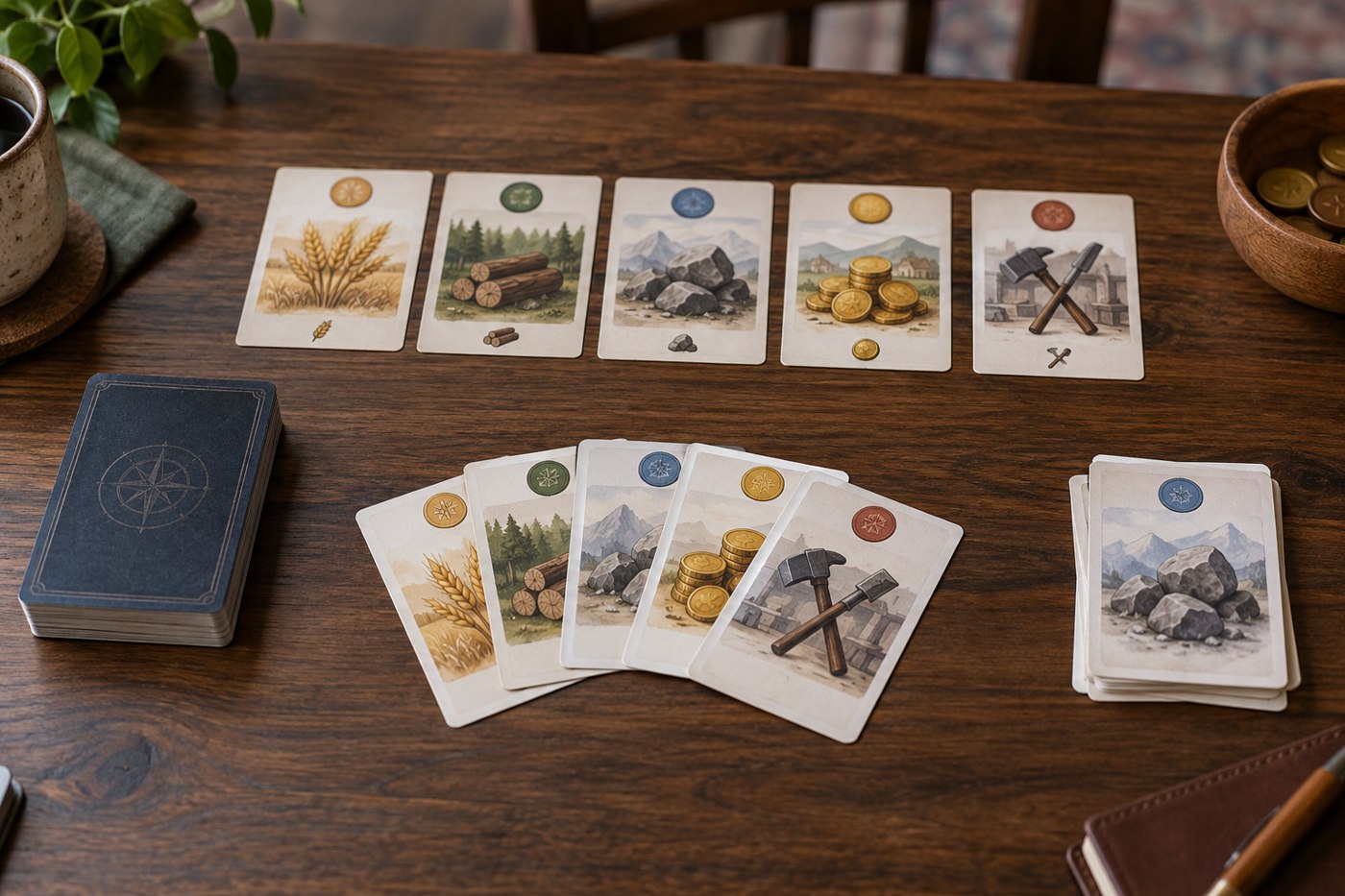
In an illustrative trading game, a blue card might buy a boat or count toward a matching set. Spending it solves an immediate problem but may break the set you hoped to score later. The decision is not simply whether boats are good; it is whether this boat is worth the future option attached to that particular card.
Understand how the hand refills
A hand replenished fully after every turn encourages different choices from one that gains a single card each round. Check whether unused cards stay, whether drawing costs an action and whether there is a hand limit. Holding a card has a real cost when it occupies scarce space or delays access to the draw pile.
Find out when discarding happens. If you draw before reducing to the limit, you may get to compare new cards with old ones. If you must discard first, that choice happens with less information. Do not borrow the sequence from a familiar game; the timing can be central to how the hand-management puzzle works.
Keep a reason for every card you save
A useful retained card has an identifiable job: paying a known cost, reacting to a likely event or completing a combination you can realistically assemble. Keeping something because it might be useful someday can leave the hand full of possibilities that never become actions.
Ask what would have to happen before you use the card. If the answer needs several unlikely draws and many turns, its future value may be less than a modest benefit available now. On the other hand, a rare defensive response may deserve space when the danger it answers is both visible and costly. Context matters more than a blanket rule to play aggressively or hoard.
Look at combinations and timing
Two cards may be worth more together than separately, but preserving the pair can require patience. Count the actions or resources needed to use both. A combination that cannot fit into a turn, or that depends on an opponent leaving a contested space available, may be less dependable than it first appears.
Order matters when one card changes the value of the next. A discount, extra draw or movement effect may open options that were unavailable at the start of the turn. Resolve the first card before committing to assumptions about the second, and keep track of whether a bonus lasts for one action, one turn or longer.
Read the public situation without exposing the hand
Your private options sit inside a shared game. A scoring opportunity may be about to close, a market item may disappear or an opponent may be close to ending the session. Reassess saved cards when those conditions change. Waiting for the perfect use can be worse than taking a solid available one.
At the same time, follow the game's information rules. Asking a teacher about a rule need not mean showing everyone your cards. Refer to the effect or symbol generally when possible, and agree how assistance will work in a learning game. Do not let another player inspect a hidden hand merely because they are helping.
Review unused cards at the end
Cards left in hand may score, become penalties or have no value at all. Know which applies before the last turn. If they are worthless afterward, the final decisions often favour spending options that you carefully preserved earlier.
After play, look at the cards you never used and ask why. Some were sensible insurance against events that did not occur; others survived because their conditions were unrealistic. That distinction helps you improve without assuming every unplayed card was a mistake.