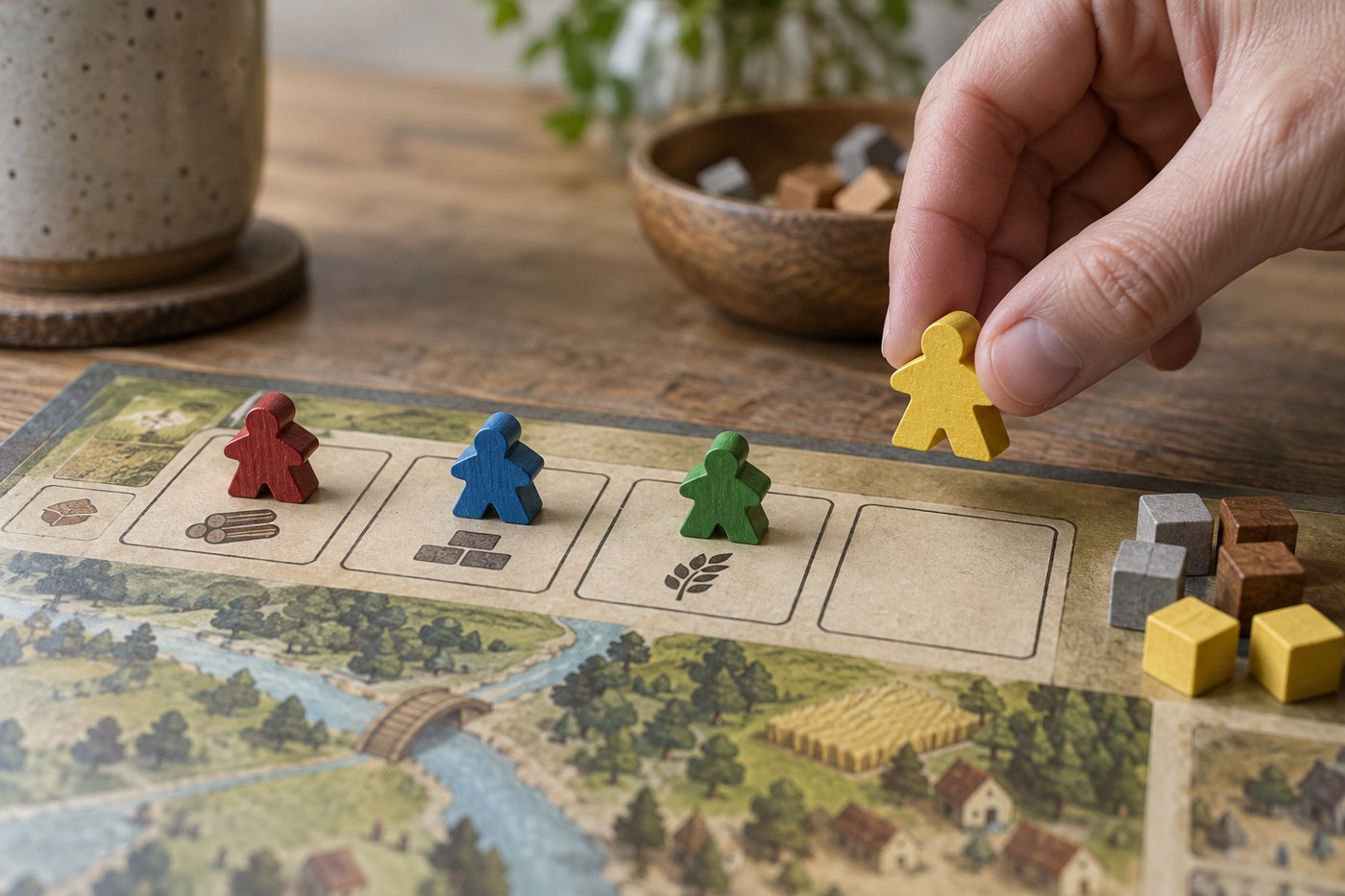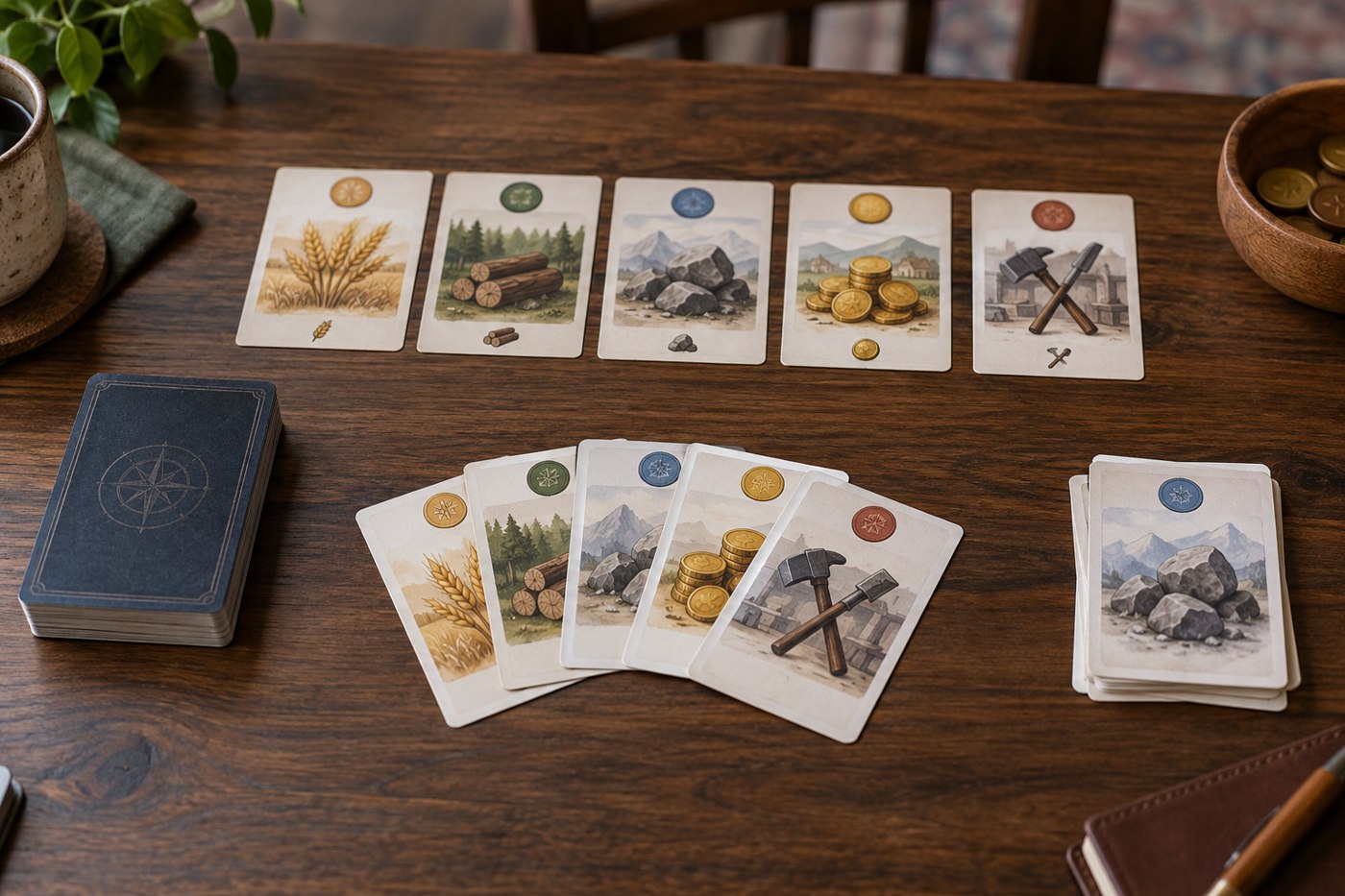
Find the exact scoring pattern
Three matching cards may score a fixed bonus, while three different cards may score nothing at all—or the reverse. Some systems give increasing rewards for larger sets; others stop improving after a threshold. Look at a complete scoring example before deciding which items to pursue.
Check whether a piece can belong to more than one set. A single red card might count toward one collection only, even if several scoring conditions mention red cards. Also determine whether incomplete sets have value, become penalties or simply remain unused. Those details change the risk of beginning another collection late in the game.
Value the piece you need next
The same item can be worth different amounts to different players. In a hypothetical game where four distinct symbols complete a set, the fourth symbol is especially useful to someone holding the other three. A duplicate of an already owned symbol may be much less useful unless another scoring rule rewards it.
Compare the cost of completing a set with the reward it adds. Spending three actions for a small bonus may be worse than starting a more accessible opportunity. A nearly finished collection feels compelling, but the pieces already acquired do not make every future cost worthwhile.
Some collections also compete for the same pieces. Before assigning an item, compare the extra points it would add to each eligible set. A total-scoring example in the rulebook can clarify this allocation more reliably than counting every apparent combination independently.
Watch supply and competition
Notice whether items are drawn randomly, drafted from a shared display or purchased from a limited pool. A missing piece available now may disappear before your next turn. Conversely, taking an awkward item early can occupy hand or storage space for a long time.
Public collections also reveal what other players want. That information can affect drafting or trade, but avoid assuming every visible pair means a player must pursue the third piece. They may have a different scoring route or a hidden objective that changes the item's value.
Stop collecting at the right time
Near the end, calculate the additional value of the next item rather than the total value of the whole collection. If five items already score well and a sixth adds little, another action may be better. If the sixth triggers a large threshold, it deserves more attention.
Keep sets arranged clearly during scoring. Group pieces by the rule being applied, confirm whether each can be reused, then count bonuses in order. This makes it easier for the table to check the result without sorting the entire collection twice.