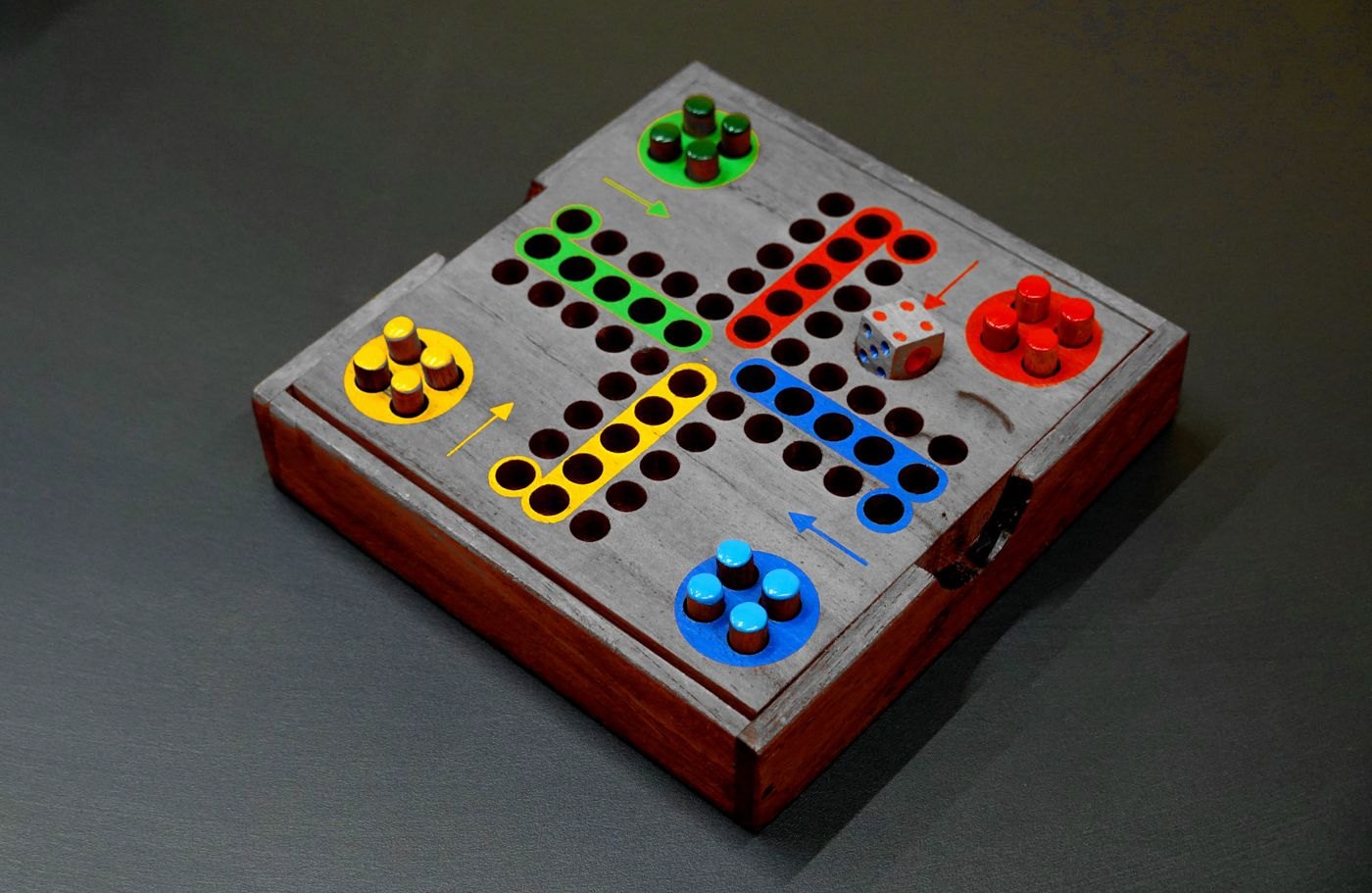
Find the precise finish condition
Check whether crossing the line ends the game immediately, triggers a final round or requires stopping on an exact space. Some games break ties by leftover resources or allow everybody an equal number of turns. Knowing this changes how you judge a late move.
Also identify prerequisites. Reaching the destination may require delivering an item, completing checkpoints or holding a particular resource. A marker near the end is not necessarily close to winning if those tasks remain. Explain such requirements before the first turn so nobody pursues the wrong race.
Count future actions, not only spaces
Compare the effort needed to reach the goal. Five easy spaces can be closer than two expensive ones. Movement cards, terrain costs and available routes determine how quickly a position can convert into a finish.
In an illustrative race, one player is three spaces away but needs to collect fuel first. Another is five spaces away with enough fuel for a long move. The second player may be the immediate threat. Look at visible resources and legal movement options before deciding who is leading.
Balance preparation with progress
Taking a turn to improve movement can repay itself if enough of the race remains. Near the end, that same improvement may never produce a benefit. Compare the time spent preparing with the future actions it could save.
Shortcuts may carry a cost or risk. Check whether a failed attempt loses a turn, resources or position. A risky route can be sensible when a safe route cannot catch the leader, but the same risk may be unnecessary when you already have a reliable finish available.
Watch interaction and turn order
Other players may block routes, take limited movement options or change shared conditions. A plan that works on an empty board may not survive their turns. Keep an alternative route where possible and check whether moving through occupied spaces is legal.
When the finish is near, know who acts before the game ends. Do not assume you will receive another turn simply because the round marker has not moved. Conversely, if everyone receives a final opportunity, scoring or position after that opportunity may matter more than being first across a visual line.
Keep the race readable
Place markers clearly on spaces and announce checkpoint completion or other public prerequisites. This helps everyone evaluate the race from the same information. If a hidden objective changes what counts as progress, follow its disclosure rules rather than revealing it for convenience.
After play, examine the point where preparation stopped being worthwhile. That transition often explains more than the final dramatic move.