Name the memory task
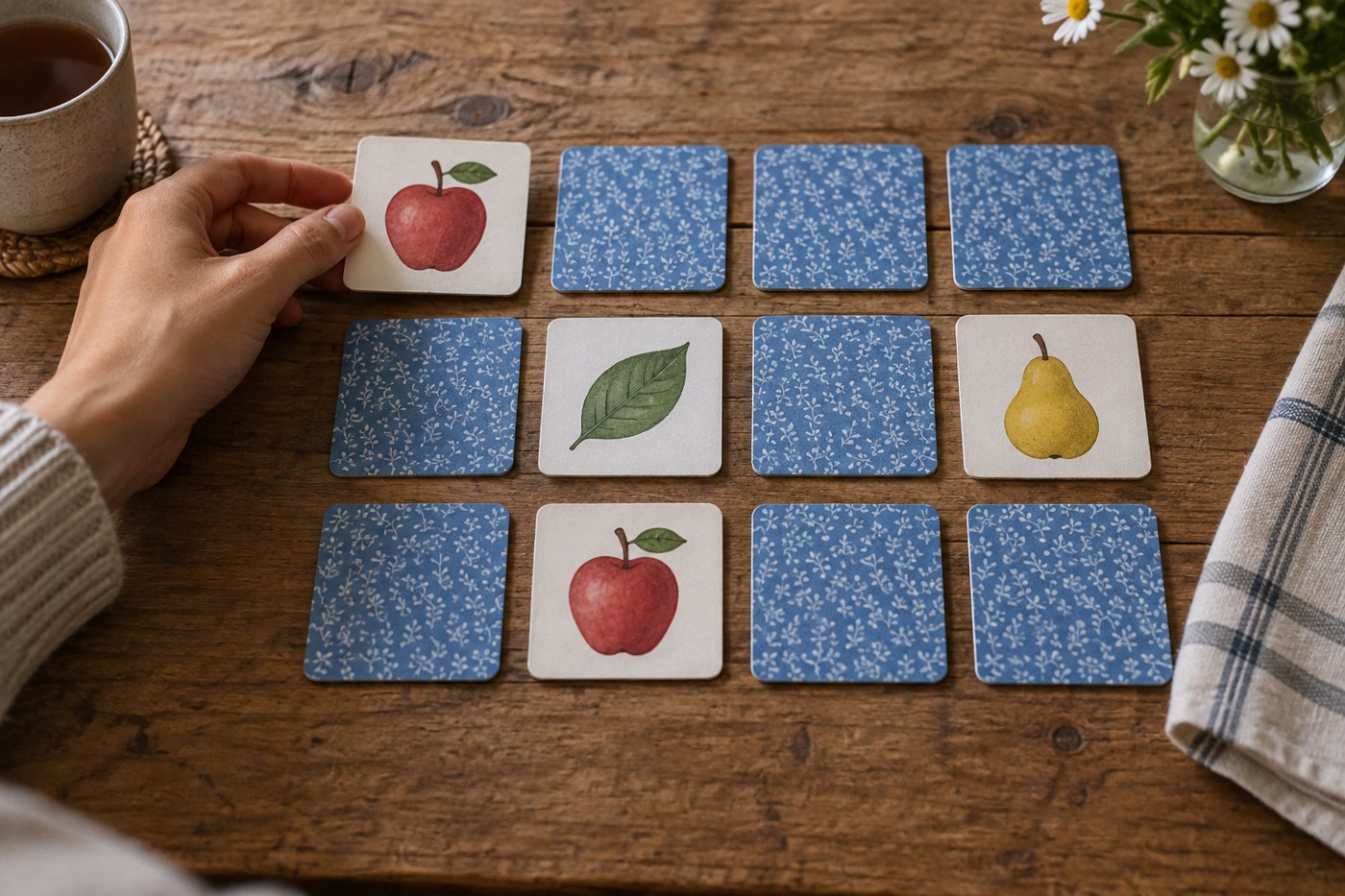
Matching pairs usually involves remembering where information appeared. A sequence game may require recalling order. Another design might ask who holds an item or which actions have already occurred. Knowing the task helps you explain it clearly and decide whether the group will enjoy it.
Check whether pieces move after being revealed. Remembering a symbol's original location is not enough if the board rotates or tiles swap. Demonstrate that change with a small example so players understand what they must update mentally.
Separate public information from reviewable information
Something shown earlier may no longer be available to look at. Read the rules for inspecting previous cards, captured tiles or discarded pieces. Do not assume that because everybody saw it once, anybody may check it again whenever they wish.
The same applies to notes and photographs. They can remove the intended memory challenge. If the group wants an adapted learning version, agree on it openly and recognise that the experience has changed. Do not quietly give one player an external record while others play from memory.
Make the presentation clear
Arrange pieces in the required pattern and keep spacing consistent. Accidental movement can make location memory unreliable in a way the game did not intend. Reveal cards long enough for everyone to see them, following any timing rules, and avoid covering the image with a hand.
Check sight lines and lighting before starting. Difficulty seeing a symbol is different from difficulty remembering it. If a player needs a closer view, make that possible within the reveal procedure so the challenge comes from the game's information rather than an awkward seat.
Keep help and competition distinct
Ask before giving hints. A well-meant reminder can decide the result or make a player feel watched. In a cooperative version, use the communication rules to determine how players may share what they remember.
For mixed ages or experience, a published easier mode may reduce the amount of information without inventing uneven assistance. Short rounds can also make mistakes less consequential. Let players discover their own useful patterns instead of insisting that everyone memorise the layout in the same way.