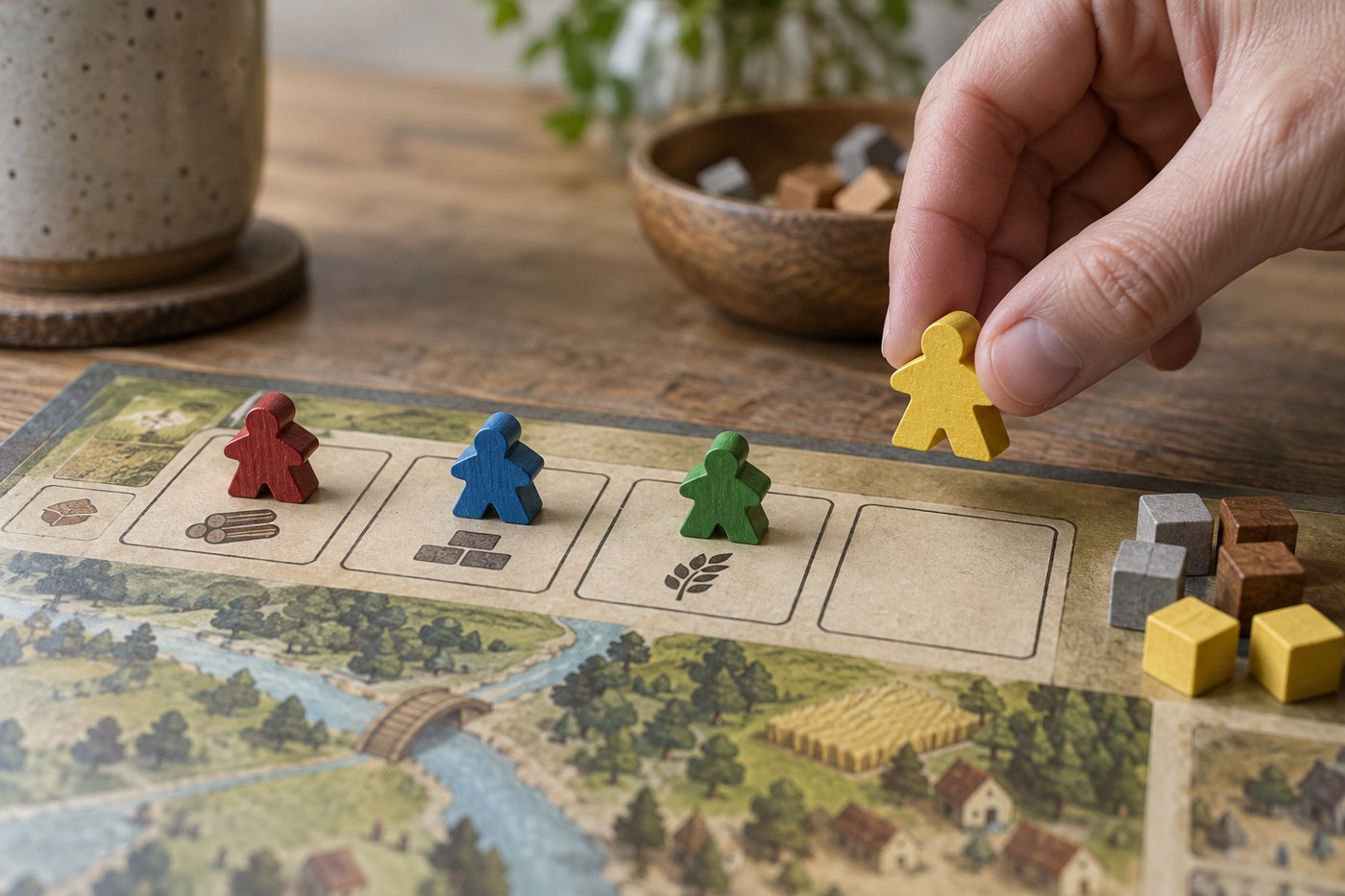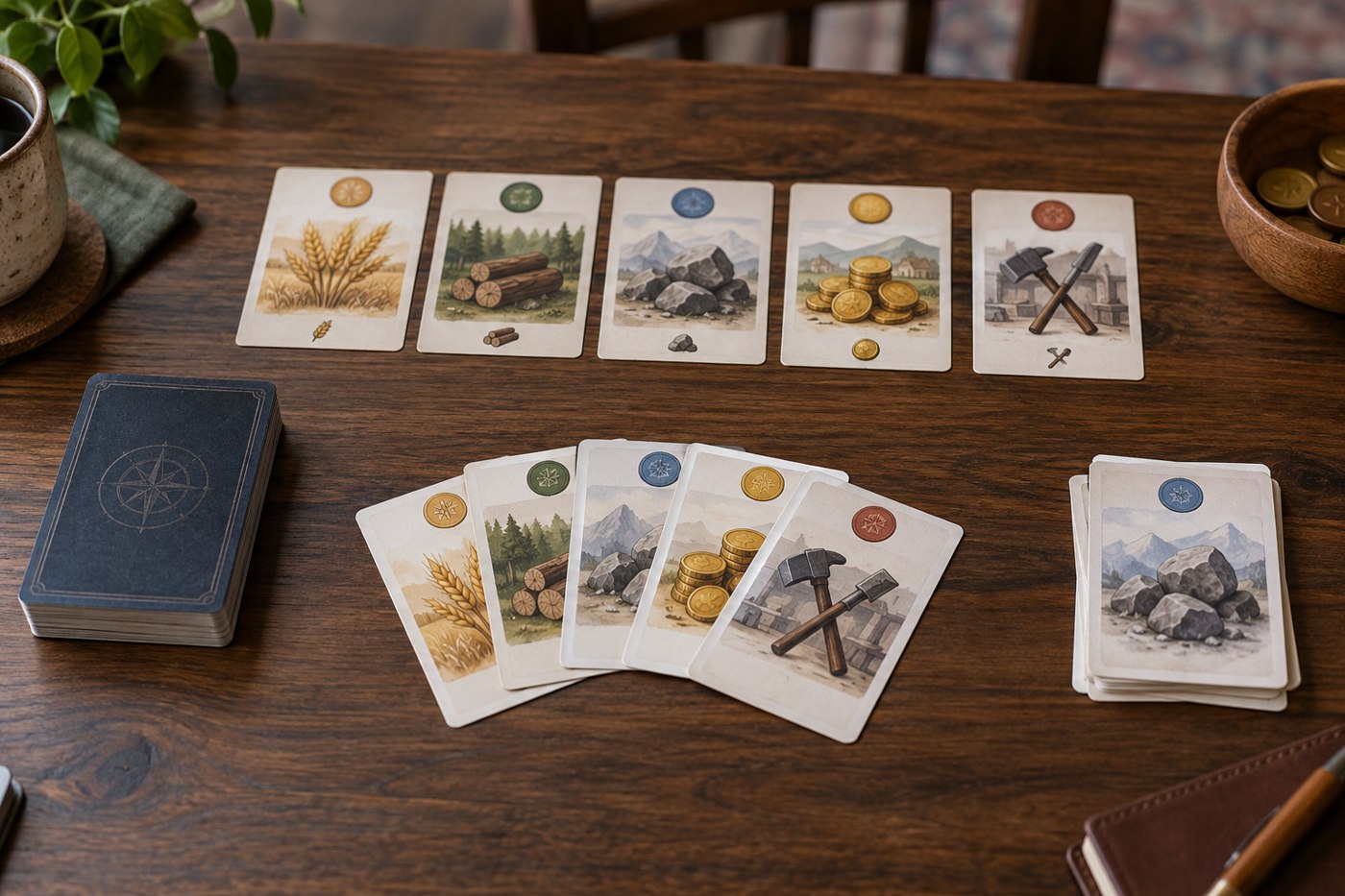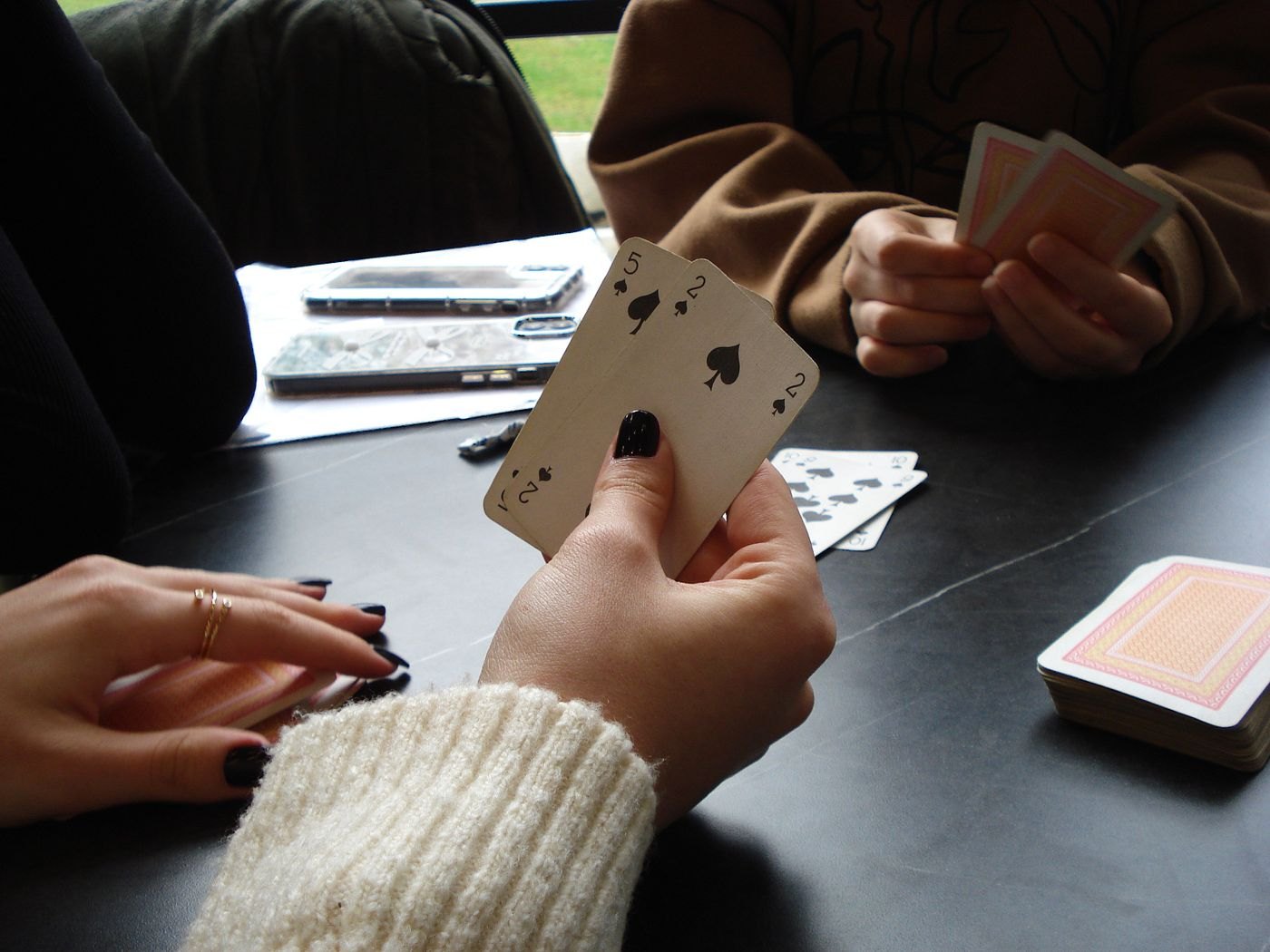
Learn the particular draft procedure
Before assessing cards, establish how the selection works. In a passing-hand draft, players usually choose from a hand and send the remaining cards onward. In an open draft, everyone can see a shared pool. Other systems change the selection order between rounds. These differences affect how much information you have and whether an option might return.
Check whether choices happen simultaneously, when cards are revealed and whether a selected card must immediately be used. A card you can keep for later offers different flexibility from one that must be paid for now. Understand what happens if you cannot use a selected card, rather than discovering the fallback after choosing it.
Compare cards against a concrete need
Start with your current position. Which card advances a scoring route, fixes a resource shortage or supplies an effect you can actually activate? A card with an impressive maximum reward may be less useful than one that completes a modest, nearly finished plan.
Imagine a hypothetical draft with resource cards and set-scoring cards. You already hold two different symbols and need a third to complete a set. The missing symbol may be especially valuable to you, but only if the set's reward justifies the opportunity you give up. If several rounds remain, a resource card that helps pay for future choices could be a reasonable alternative.
Use what you know about the remaining pool
A passing hand gives you partial information about cards that may reach another player. If the hand later returns, you can compare what remains with what you remember seeing. Do not assume a desired card will survive simply because it was not the obvious choice for you. Other players may value it for different reasons.
An open draft makes immediate competition clearer. Count how many similar options remain and whether the selection order gives someone else a chance to take them first. If two cards serve the same purpose for you but only one solves a rival's visible problem, the less contested option may still be available on your next choice.
Memory requirements and note-taking permissions vary. Follow the rules and the group's agreed approach; do not create a written card log in a game that expects players to remember information. The practical skill is recognising relevant public patterns, not treating every draft as an exercise in perfect recall.
Know when denying a card is expensive
Taking a card mainly to prevent an opponent from getting it is often called denial drafting. It can matter when a card creates a large visible swing, but it also costs you the benefit of your best alternative. Blocking someone without improving your own position may help a third player more than it helps you.
Compare the likely outcomes rather than reacting to every attractive card. If the opponent has several substitutes, denying one may achieve little. If taking it leaves you unable to complete a crucial requirement, the defensive move may cost more than it prevents. There is no general obligation to stop whoever currently appears ahead.
Keep the physical draft orderly
In a passing draft, separate your selected card from the hand you are passing. Wait for the agreed reveal or pass signal so hands do not pile up between players. Passing direction can change between rounds, so announce it clearly and check that everybody sends the correct packet.
A selection should be final at the point specified by the rules. Do not look at the next hand and then change your previous choice. If a new player needs more time to read, give them that time before passing. Speed can improve with familiarity; the procedure needs to be reliable from the beginning.
Think across the whole draft
Early selections may establish flexibility, while later picks complete or convert what you have built. Revisit the plan as available cards change. Continuing to chase a rare missing card can waste several useful alternatives, especially near the end.
The publisher's 7 Wonders materials provide one example of drafting across successive Ages with different kinds of development. That is a useful reference point, but other drafting games have different economies and timing. Learn the decision pattern while checking the exact procedure in the game you are playing.