Compare like with like
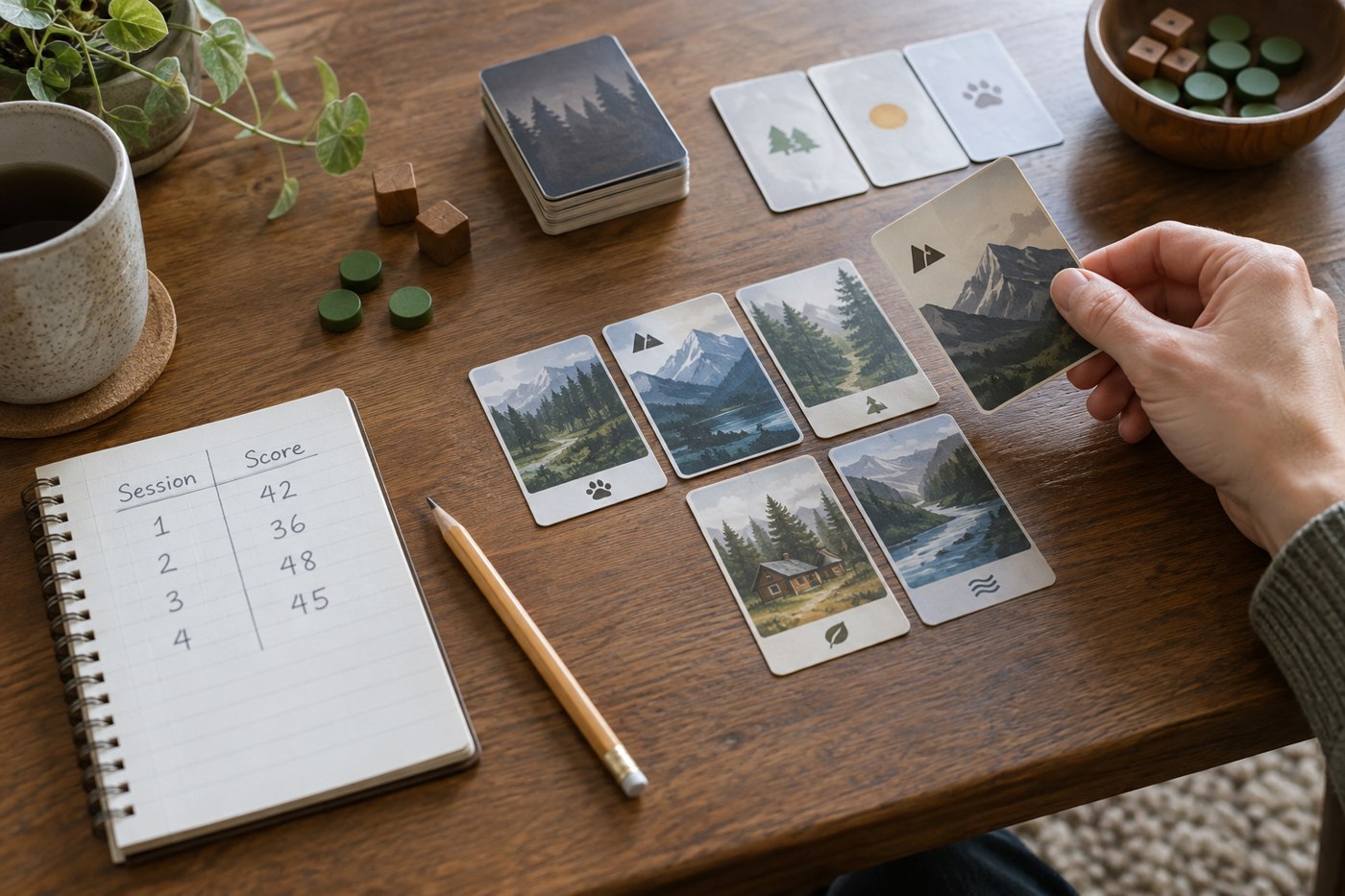
Record the scenario, difficulty, character or other major setup choices alongside a score if you intend to compare sessions. A harder configuration may produce a lower total even when your decisions improve. Different scenarios may reward different things, making a single all-time ranking misleading.
Check whether the rules provide a scoring system for solo play or whether the objective is simply to win a scenario. Do not invent precision where the game does not offer it. A successful outcome with an interesting new approach can be a useful result even without a number attached.
Choose a small purpose for the record
You might want to see whether a strategy becomes more reliable, remember which difficulty feels comfortable or keep a history of completed challenges. Pick the information that serves that purpose. A date, setup, result and one observation are often enough.
Avoid recording every turn unless that is an activity you enjoy in its own right. Detailed logs can turn a relaxed session into administration and still fail to explain why the final score changed. One note about a repeated bottleneck may be more useful than a page of resource totals.
Allow the learning sessions to look different
Mark a first play or a game with a significant rules correction as a learning session. Keep the record if useful, but do not compare it uncritically with a clean later attempt. If you changed a rule or restarted after seeing hidden information, note that context.
This is not about disqualifying yourself. It is about making the record readable later. A score without its conditions can create unnecessary confusion when you try to remember why one session was dramatically higher than the others.
Set goals other than a personal best
Try a different character, understand an unfamiliar mechanism or complete a session without forgetting upkeep. These goals can make a familiar game interesting even when they reduce the likely score. A safe, well-practised strategy is not the only worthwhile way to play.
If score chasing makes the game less enjoyable, stop logging for a while. You can still use the printed scoring rules to finish each session without maintaining a permanent comparison. The record should support the experience you want, not dictate it.
Review trends cautiously
A few sessions can be affected by random draws, scenario variation and ordinary differences in concentration. Do not infer a firm improvement or decline from one unusual result. Look for repeated decisions you understand better and mistakes that occur less often.
When a score does improve, ask what changed. A clear explanation about timing or resource use is something you can apply again. A larger number alone does not tell you whether the same approach will work in a different setup.