Separate the finish trigger from victory
Look for both the end-of-game condition and the winner determination. One player may trigger the finish by placing a final piece, while the highest score still wins. Another game may end immediately when somebody completes an objective. Check whether the current round finishes, whether everybody receives the same number of turns and when final effects resolve.
Explain this distinction before the opening move. Players need to know whether they are racing directly toward victory or controlling when a later comparison happens. Do not assume the person ending the game receives a bonus unless the rules explicitly award one.
Locate the scoring routes
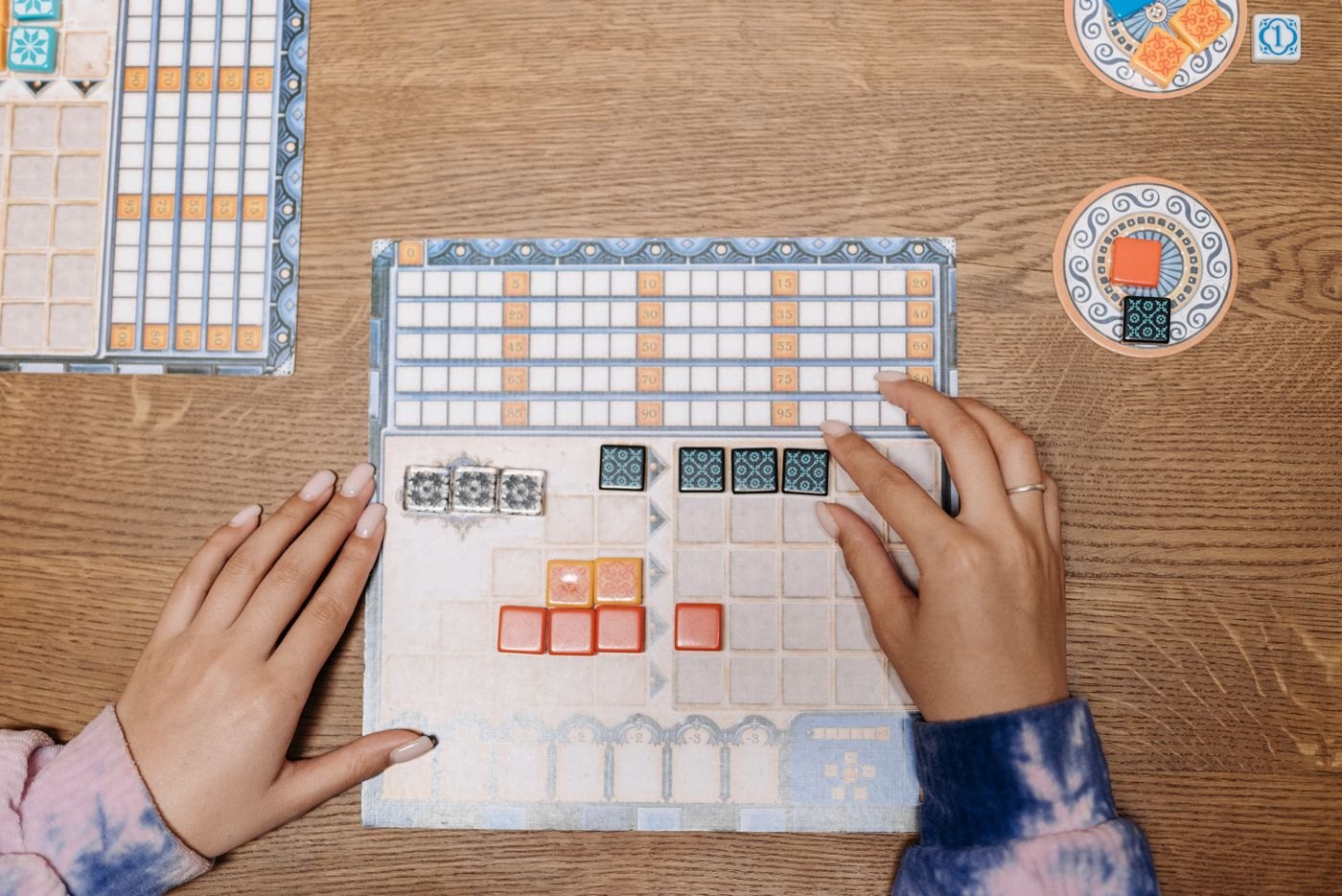
Identify the main ways to gain points or satisfy the objective. Distinguish points already recorded on a track from items that score only at the end. If leftover resources are worthless, say so. If a secret objective can change the result, explain its existence without revealing anyone's private information.
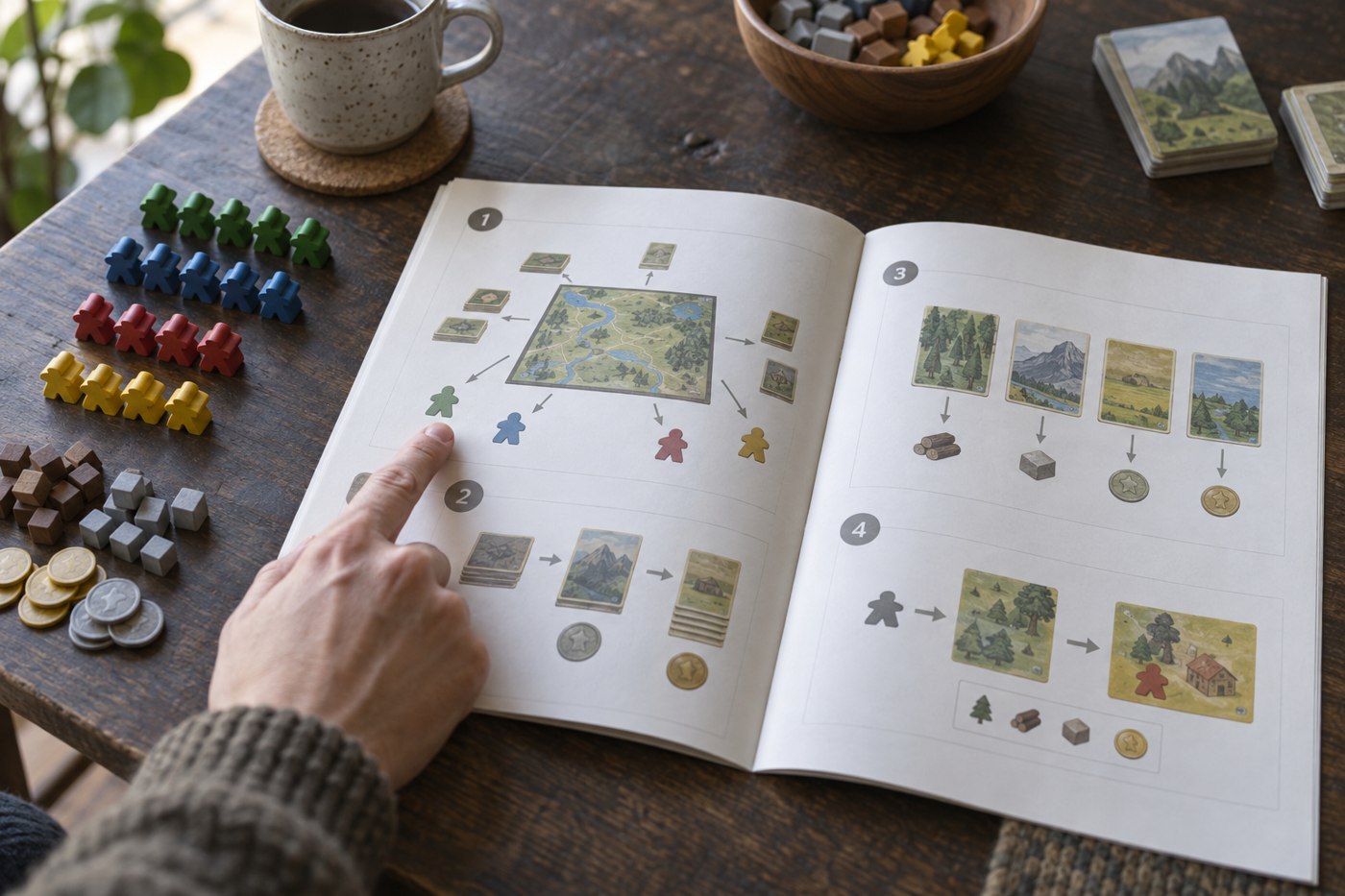
For a learning game, connect each basic action to one possible purpose. Gathering materials may support a future build; drawing cards may improve options; completing an order may score immediately. This explains the vocabulary of choice without claiming a single opening is always correct.
Use the goal to ask better questions
When unsure between two moves, ask how each helps before the remaining game ends. An investment can be useful early and too slow late. A modest immediate reward may be enough when only one turn remains. The point is not to calculate a perfect strategy, but to connect action and consequence.
Check tie-breaking rules when reading final scoring, although they do not need to dominate the initial explanation. Keep them available if a close finish develops. A player should never have to guess which apparently equal result counts as a win.