Learn the awkward parts before people arrive
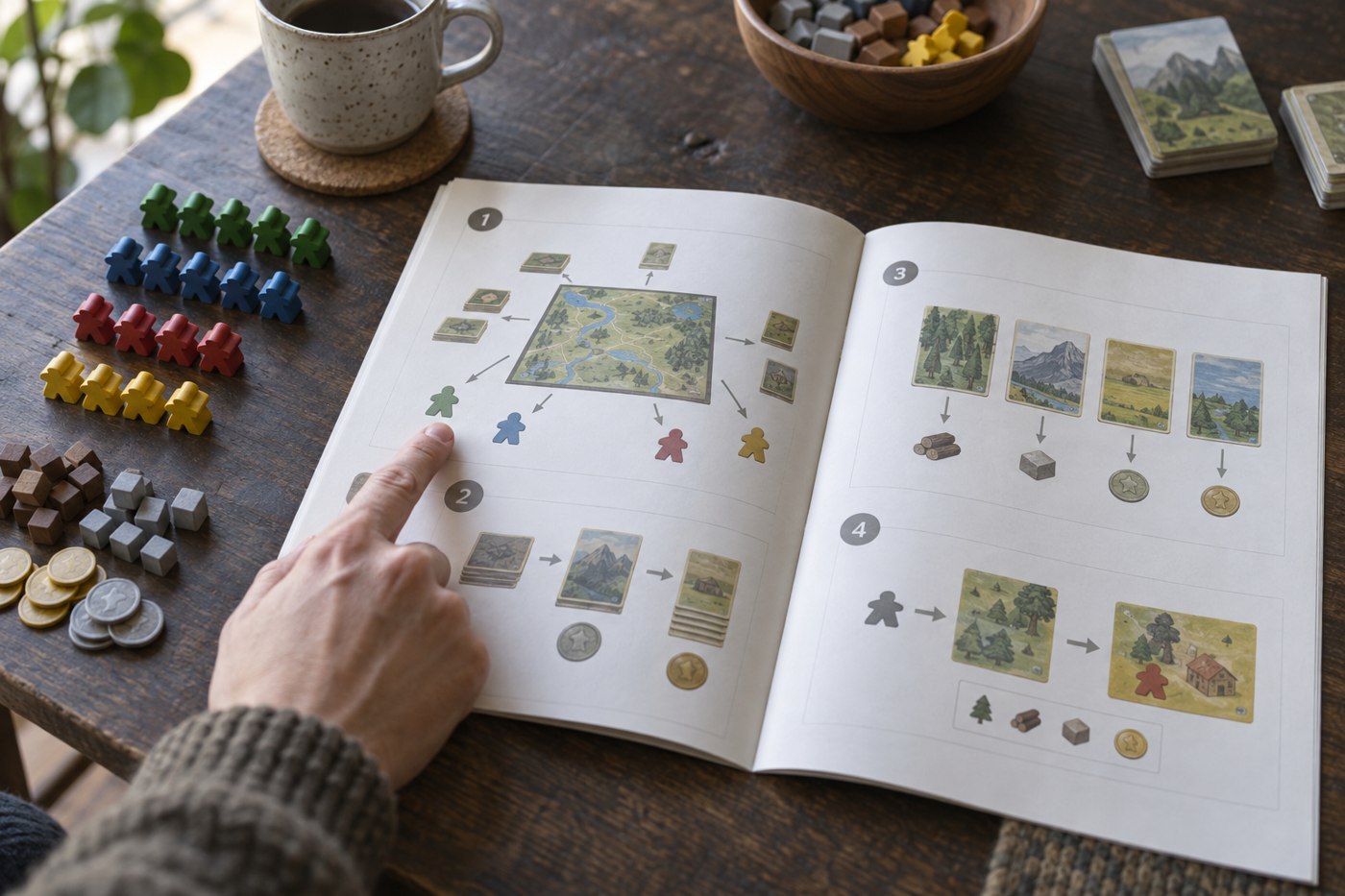
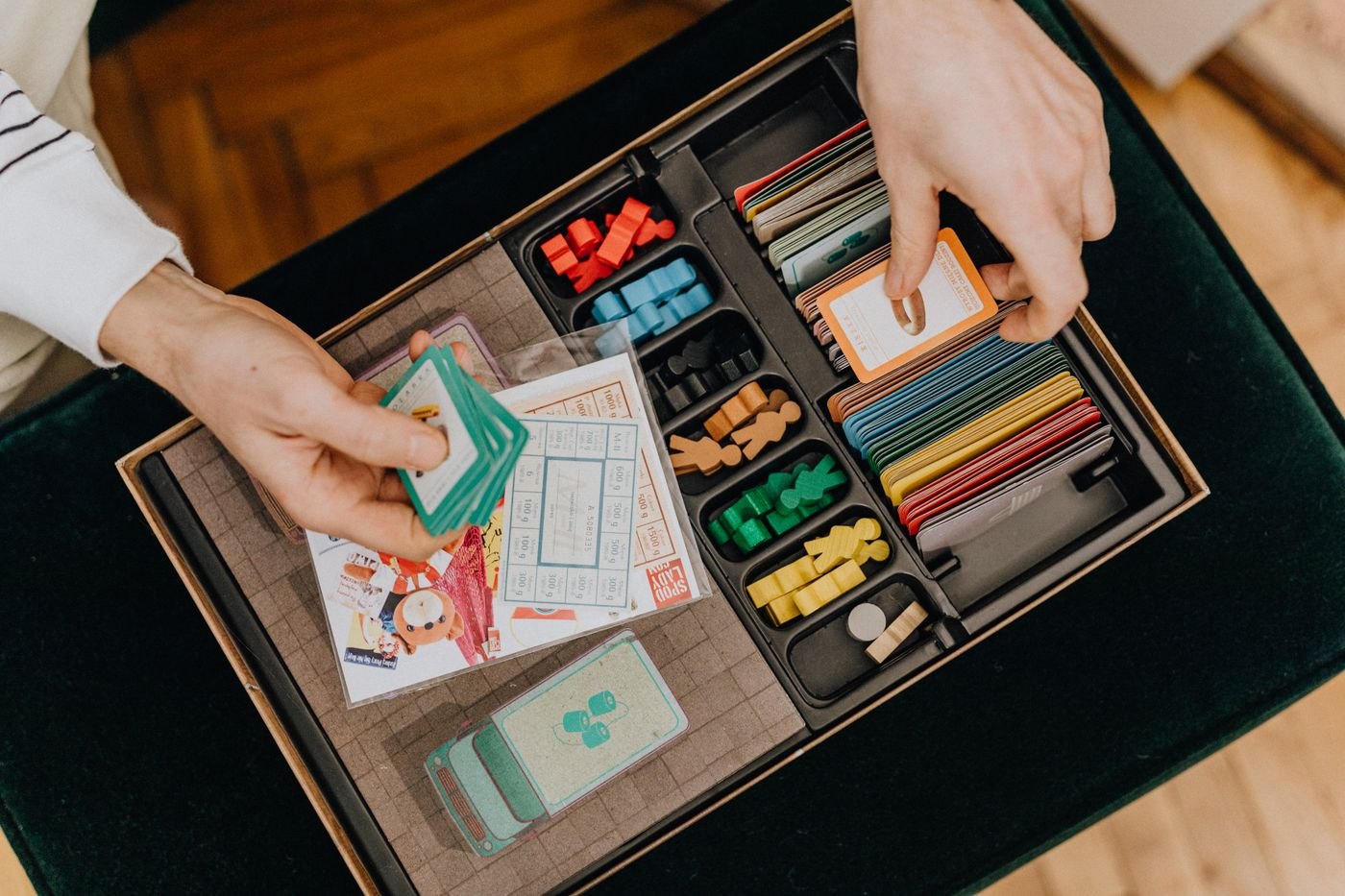
Set up the game yourself and move through a few imaginary turns. Reading while looking at the actual components often reveals questions that a rulebook skim misses: where spent resources go, which cards are face up, and whether a phase happens once per player or once per round. Find the answers before the evening begins.
Keep a short note of the opening setup, turn sequence and end condition. This is a reminder for the teacher, not a second rulebook for everyone else. If the game includes a recommended first scenario or starting arrangement, use it. Adding expansion modules while teaching a base game creates extra relationships that new players must learn before they can judge their choices.
Give the pieces a purpose
Start with a sentence about the activity, followed by the actual winning condition. In a hypothetical trading game, that might be: we gather goods to complete orders, and the player with the most points after the final round wins. Then point to the orders, goods and score track. People now have places to attach the next pieces of information.
Explain how the game ends separately from how someone wins. Running out of cards might trigger the finish without awarding victory to the player who emptied the deck. Mention any major end scoring early enough for players to plan around it. A hidden explanation is more frustrating than a hidden card: nobody should discover after an hour that an unmentioned objective determined the result.
Demonstrate one ordinary turn
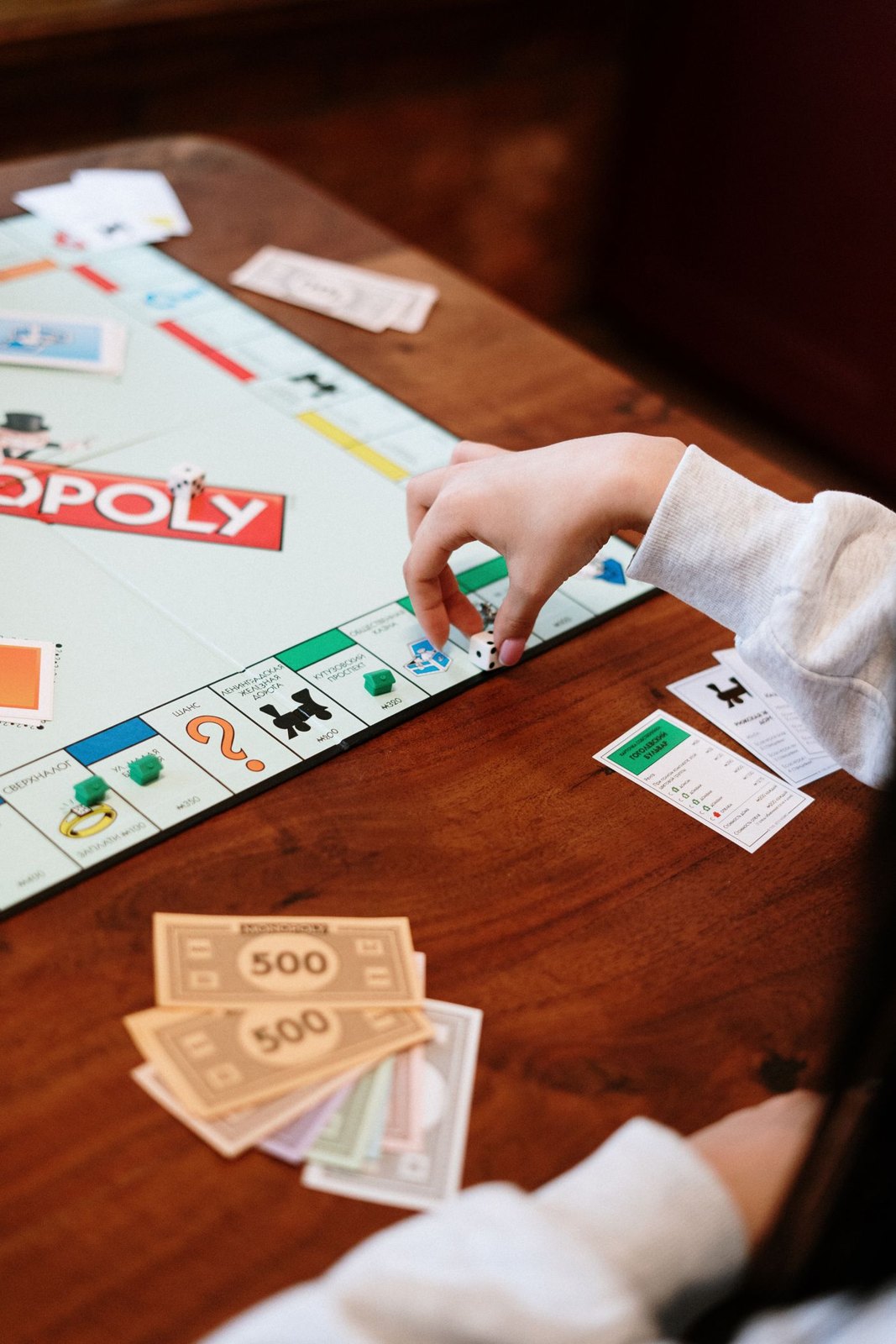
Move the pieces as you speak. Choose a simple legal action, pay its cost visibly, take its benefit and perform the end-of-turn cleanup. Avoid combining three special effects in the first example. The demonstration should show a pattern that another player can repeat, rather than a clever move that makes sense only after several explanations.
Use the words printed on the player aids. Calling the same resource money, coins and gold can make three labels sound like three different things. Point to the matching icon when it first appears, then use that term consistently. If a symbol has two meanings in different locations, show those locations side by side instead of asking listeners to remember an abstract exception.
Separate immediate decisions from later details
A player needs to know every available basic action before choosing one. They may not need an explanation of each rare card in the deck. Teach the structure that governs the cards, then read an unusual card when it enters play. Check whether seeing it too late would invalidate an earlier decision; if so, that information belongs in the initial explanation.
Give warnings that prevent expensive misunderstandings, but keep strategy advice modest. Saying that unused resources score nothing is rules information. Saying that everyone should buy the same building first is a strategic opinion that narrows their choices. Offer a couple of plausible opening options and let players decide. In a competitive game, explain consequences without selecting an opponent's move for them.
Invite a first action, not a memory test
Instead of asking whether everyone understands everything, ask the first player which action they would like to try. A concrete choice exposes the missing link quickly. If they reach for a card without paying its cost, explain that step while the pieces are still in place. Let them reconsider once they have the information; the purpose of the opening is to make the system usable.
Decide whether those first turns count before starting them. A practice round is helpful when players want to try consequences freely, but an announced restart can make people stop paying attention. If the game reveals secret information or consumes scenario materials, check the rules before using its real opening as a disposable demonstration.
Keep the explanation open during play
Leave the rulebook and reference cards within reach. When a question comes up, distinguish a confirmed rule from your recollection, and look up the relevant passage if the answer changes a decision. Players should not have to argue against the teacher's confidence to get a rule checked. Pause before revealing further information if a correction may require undoing a move.
After the first round, give one brief reminder about an easily missed obligation or the end trigger. Avoid narrating everybody's decisions for the entire session. As players begin explaining effects to each other, step back. The successful teach is the one that lets the table play without needing you to approve each turn.