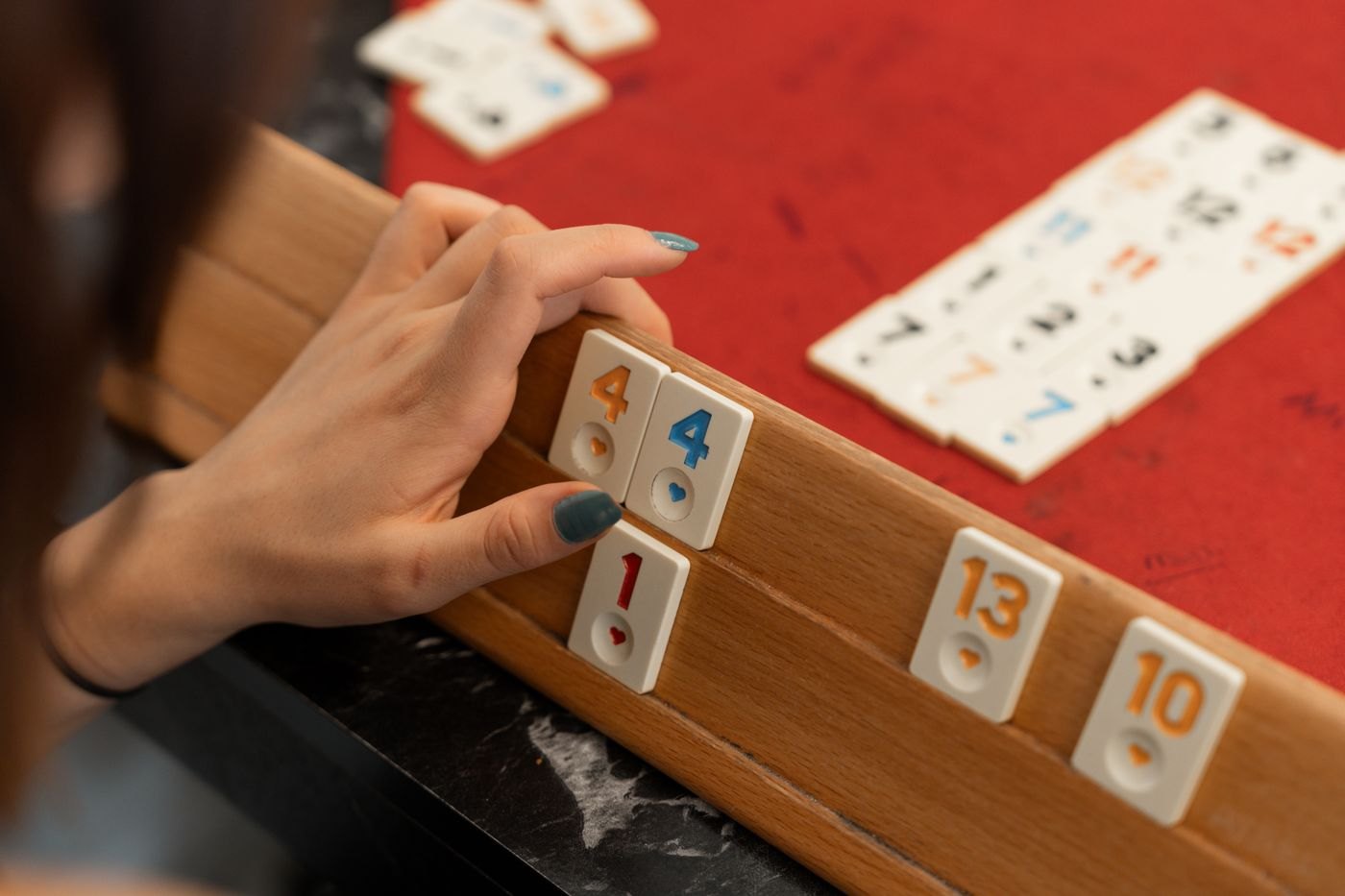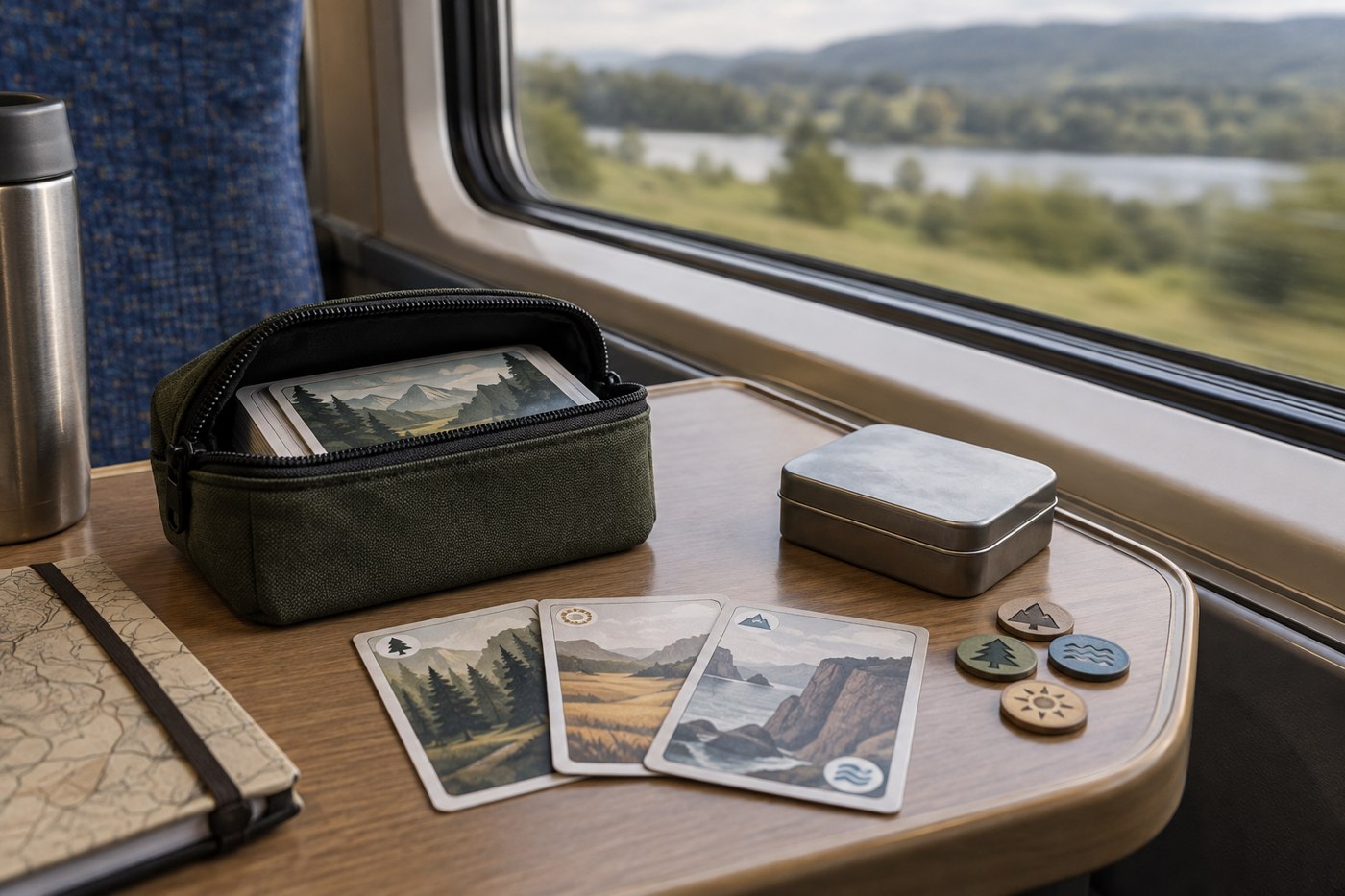
Picture the actual playing surface
Estimate the clear area available to each player and the stability of the surface. A small deck may still need a wide public display, while a larger box may contain a compact playing layout. Check the late-game spread as well as the opening. Avoid assuming cards can overlap if their text or position matters.
Consider movement and wind. Loose lightweight pieces can be awkward on a moving vehicle or outdoors. A lipped tray may help contain ordinary tokens, but it does not make every game practical in transit. Choose something whose state is easy to maintain under the expected conditions.
Plan for interruptions
Travel brings announcements, stops and changing attention. Look for natural round boundaries or a state that can be recorded and restored. A timed game or delicate spatial arrangement may be difficult to pause. Read whether an unfinished session can end meaningfully or whether the whole experience depends on reaching a long final sequence.
If people may join and leave, check whether the rules allow changes between rounds. Do not assume a game supports a flexible group simply because it is short. A fixed partnership or hidden-role setup may become awkward when one person needs to attend to a journey detail.
Match handling and information demands
Inspect card text under the likely lighting. Small print may be harder to use in a dim carriage or bright outdoor glare. Games requiring frequent private reading can be inconvenient when seats are close together. Consider whether cards can be held comfortably without revealing information to adjacent players.
Think about sound and social context. A loud guessing game may suit a rented house but be inconsiderate in a quiet shared waiting area. A negotiation game needs enough audibility for everyone to follow. Choose the social activity as carefully as the component size.
Pack for use and return
Keep components grouped in closed bags or a secure small container. Include the necessary rules and reference cards; do not rely on a connection being available when you need them. If removing outer packaging, preserve labels that identify decks or scenario order. A reduced travel kit should remain complete for the intended mode.
Count important pieces before leaving the playing location. Use a simple inventory for unusual tokens rather than searching a seat gap after arriving home. Keep liquids in a separate part of the bag, and avoid compressing cards beneath heavy objects. Portability includes getting the game home in usable condition.
Choose for the people on the journey
A familiar game may be easier to use during travel because it reduces explanation and rule lookups. If bringing something new, learn it before departure and test the intended layout. Ask whether fellow travellers actually want to play; a compact game is an option for shared time, not an obligation to fill every pause.
For a journey involving several stops, choose a container that can be closed quickly without leaving loose cards in a seat pocket. Keep the return packing method as simple as the opening setup. A game that takes minutes to secure may be inconvenient when departure is announced unexpectedly.