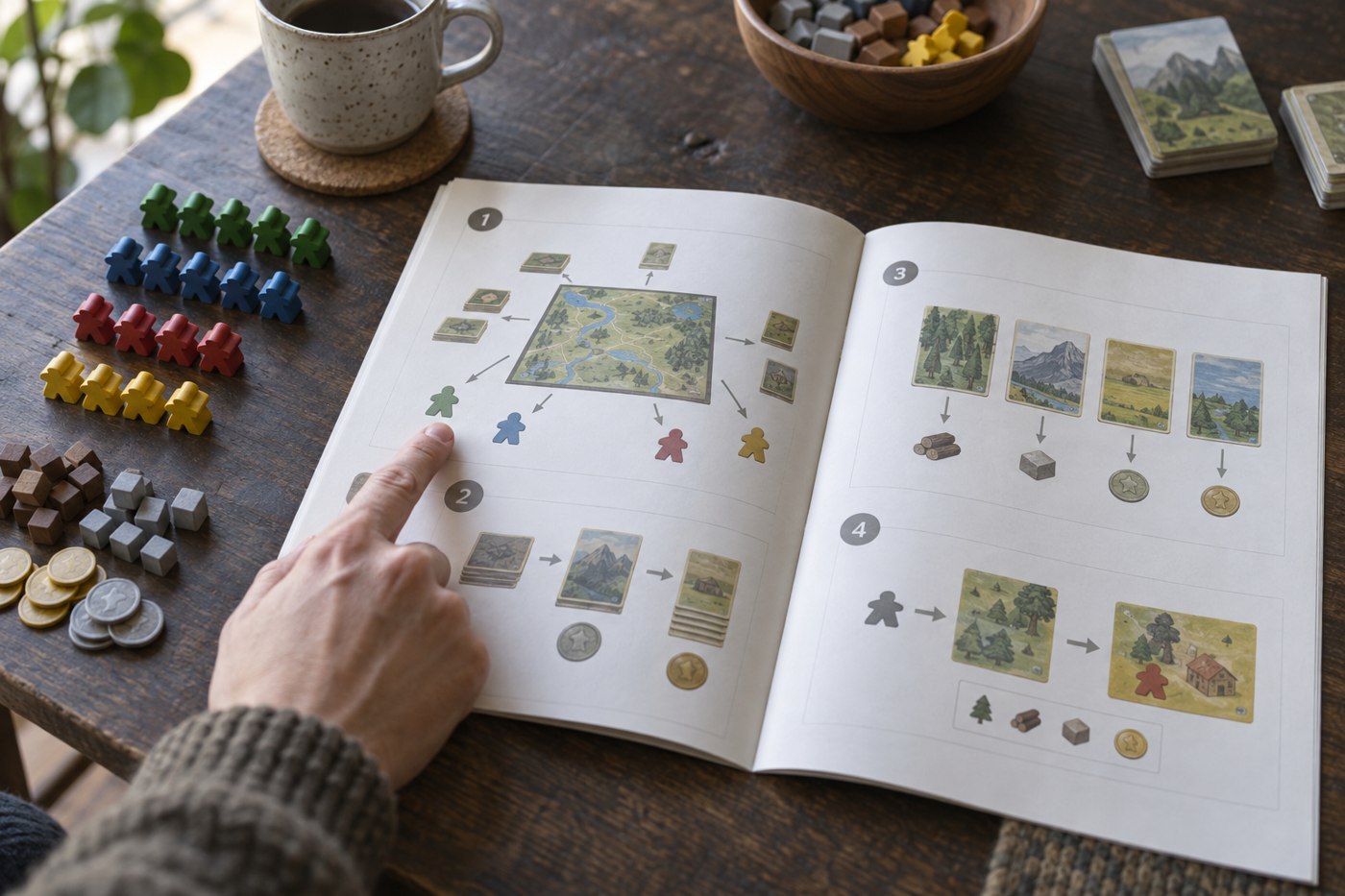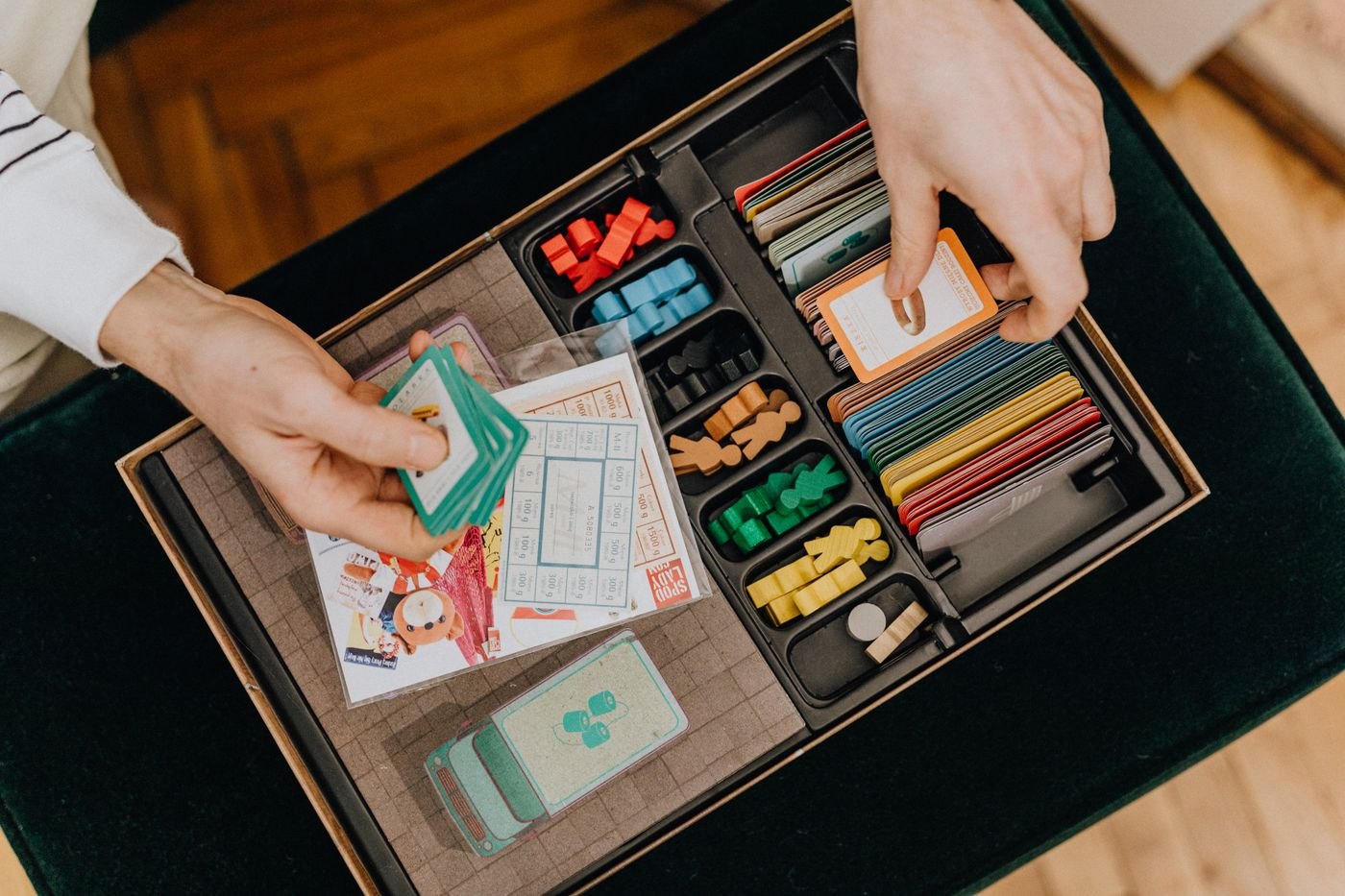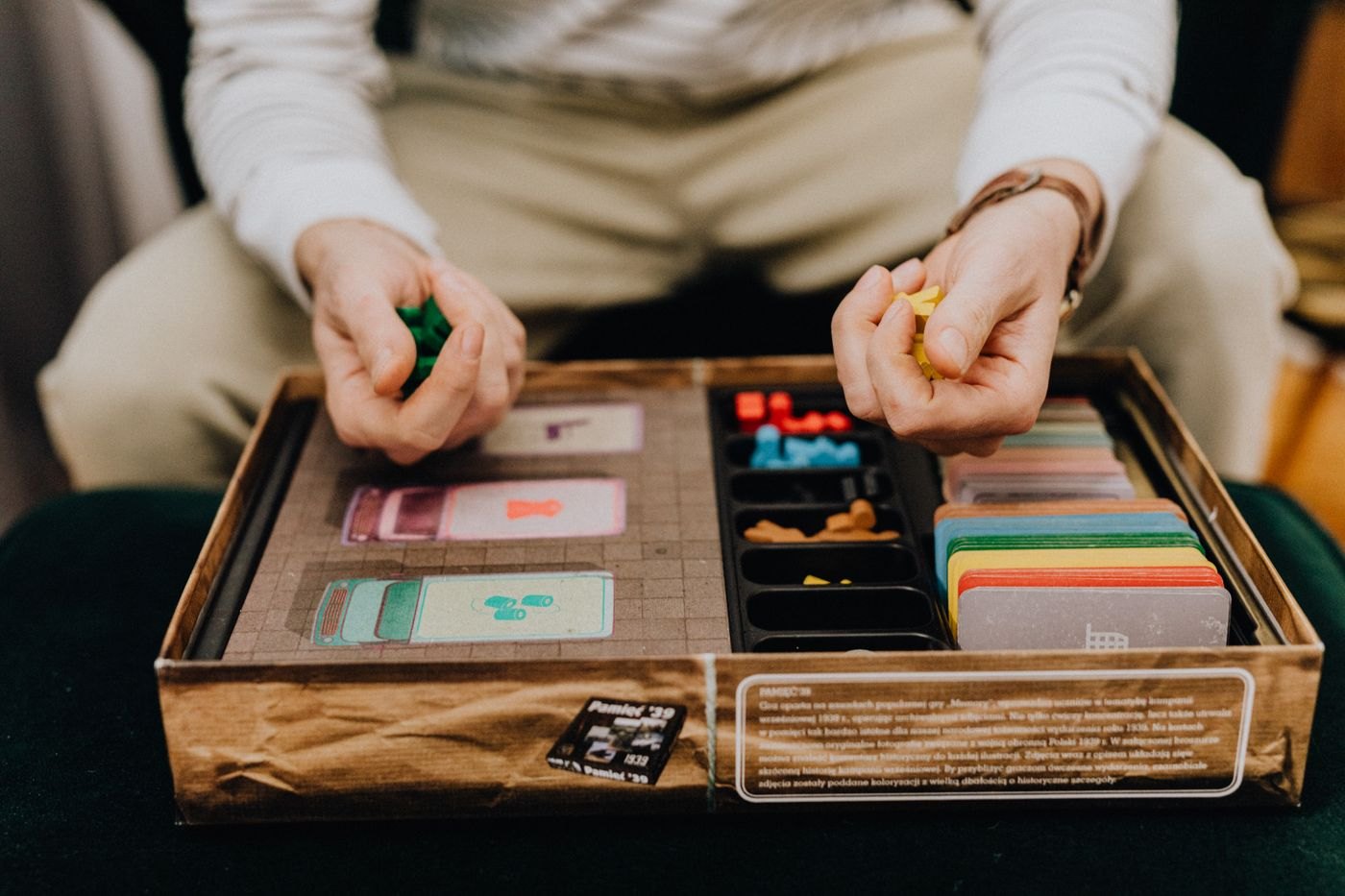
Separate ownership clearly
Leave a gap between each player's resources and the shared bank. A shallow tray can mark that boundary, but an uncluttered area works too. Avoid placing the bank directly against one player's board, where an ordinary payment can look like a transfer to that person.
If a game allows public resource counts, keep pieces in loose groups that are easy to count. Stacks can save space but may conceal quantity or denomination. Do not insist on open display when the rules deliberately hide holdings; use the game's screen or another permitted method in that case.
Make values easy to recognise
Sort denominations in the bank so that a player can take or pay an exact amount. Keep symbols or numbers facing upward. If colours are similar under the room lighting, separate them more widely and use their printed identifiers. Adding an unambiguous label to a tray can help without altering the components.
When changing several small pieces for a larger value, announce the exchange and leave the old pieces visible until the replacement is checked. This avoids accidental gains during busy turns. Follow any rule that limits the supply; exchanging values must not create a component that the game intentionally withholds.
Keep transactions distinct
Pay a cost before taking the reward when that is the prescribed order. Moving everything simultaneously makes it harder to detect an unaffordable action. For a multi-step effect, keep the transaction in a small clear space until resolved, then return pieces to their normal positions.
At round end, verify recurring income or spending against the relevant player board. A brief check is easier than reconstructing several rounds of totals later. Do not repeatedly audit another player's area as a substitute for trusting them; use a shared procedure that applies equally to everyone.
Keep the bank reachable from more than one seat where possible. If only one person can access every resource, routine transactions can bottleneck through them. A second shared tray is useful only if the rules permit splitting the supply and everyone can still judge whether pieces remain available.