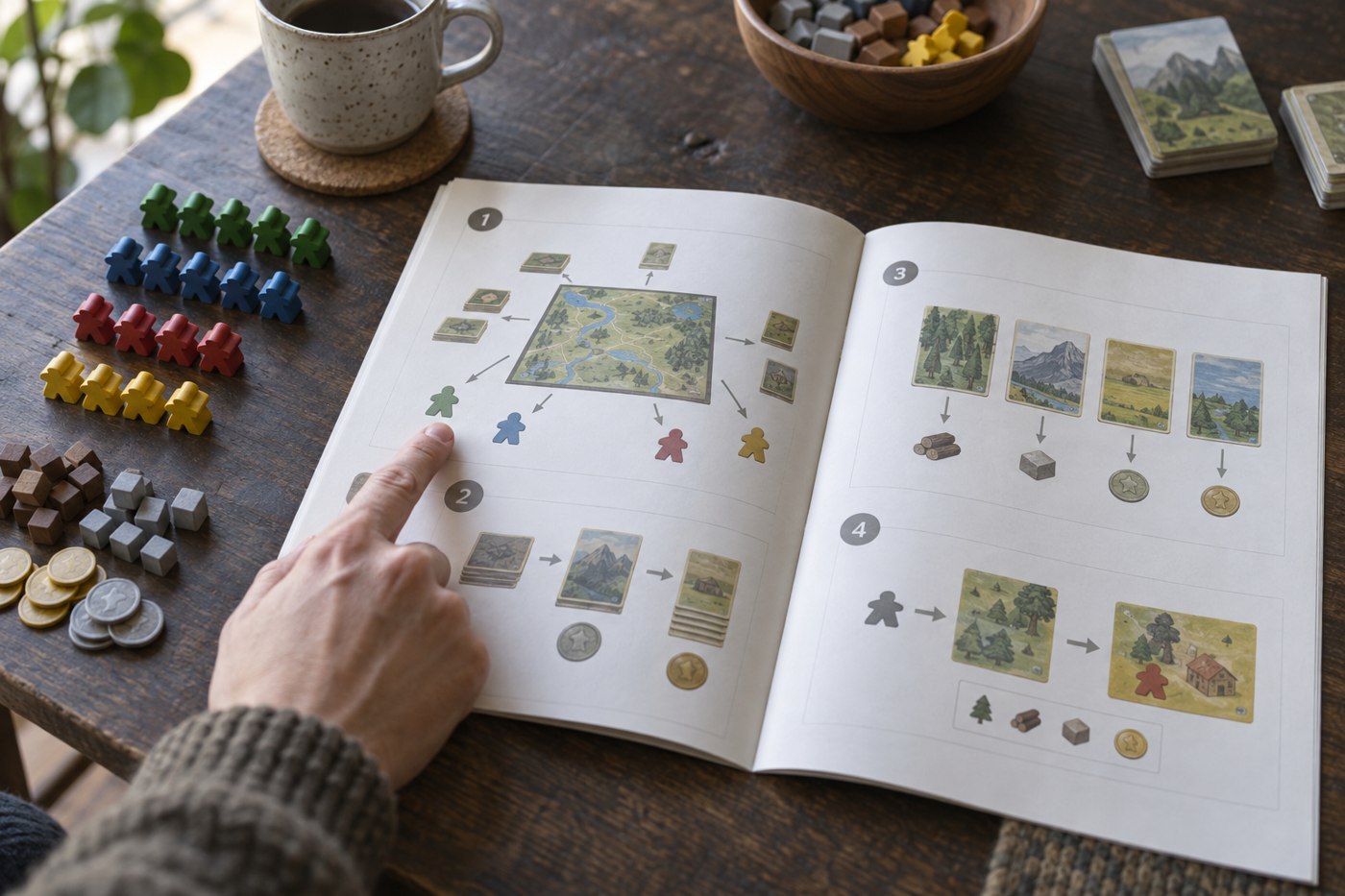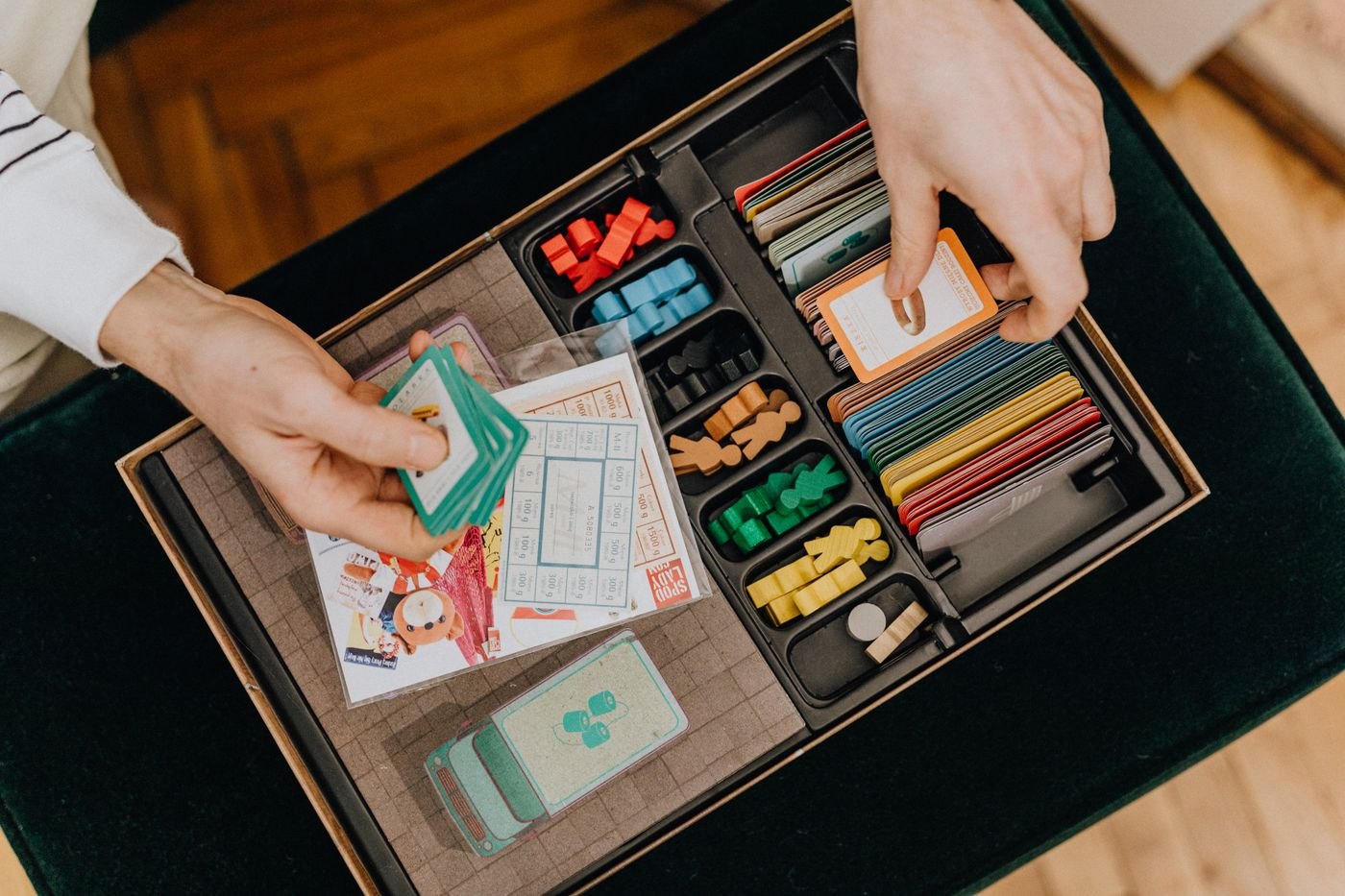
Find the authorised starting material
Read opening instructions on the box contents before searching through every deck. A tutorial, introductory booklet or first scenario may specify exactly what the teacher should know. Follow that route instead of reading all numbered cards to prepare a more complete explanation. Preparation should not consume the discovery that the group bought the game to share.
Separate general rules from scenario text. General rules describe movement, actions, communication and resolution. Scenario text may contain objectives or events that become public only at a specified point. Keep sealed or numbered material in its intended order and avoid displaying reverse sides that reveal future information.
Teach procedures with neutral examples
Use invented names or already revealed components to demonstrate a test, exchange or movement. If showing the real example would expose a later answer, substitute a clearly hypothetical situation that uses the same procedure. Do not invent a new rule while changing the story details; the mechanical sequence still needs to match.
Explain how to recognise a trigger without naming its eventual reward. Players may need to know that a symbol tells them to open a numbered card, but not what the card contains. The same applies to failure: explain what procedure follows a failed test without disclosing a specific later consequence unless the game requires players to know it.
Keep the limits of advice clear
A player who has seen the scenario before should disclose that fact. They can explain rules, but suggesting the correct door or warning against a particular object may remove a choice disguised as helpful teaching. Ask the group what role they want that person to take, especially if the puzzle depends heavily on surprise.
When a newcomer asks whether an action is wise, separate legality from foreknowledge. You can confirm that a move is allowed and describe its visible cost without predicting hidden results. If the rules deliberately require an uninformed choice, say that the outcome is not yet available rather than hinting through tone or selective silence.
Control what appears in searches and notes
Look for publisher material marked as spoiler-free or organised by scenario. A broad web search can expose titles, card images and answers in snippets before you open anything. Use exact rule terms and avoid browsing full walkthroughs when a procedural clarification is all you need.
Keep private campaign notes away from the open teaching area. Label notes by session or scenario so the correct page can be found without showing later content. If taking photographs for setup, frame only the revealed components. A useful reference picture should not become an accidental preview of sealed material.
Let uncertainty remain part of play
Do not fill every pause with an explanation. Players may be considering a puzzle rather than failing to understand a rule. Ask whether they want a rules clarification or a hint; those are different requests. Use the game's published hint system where available and let the group agree before revealing assistance.