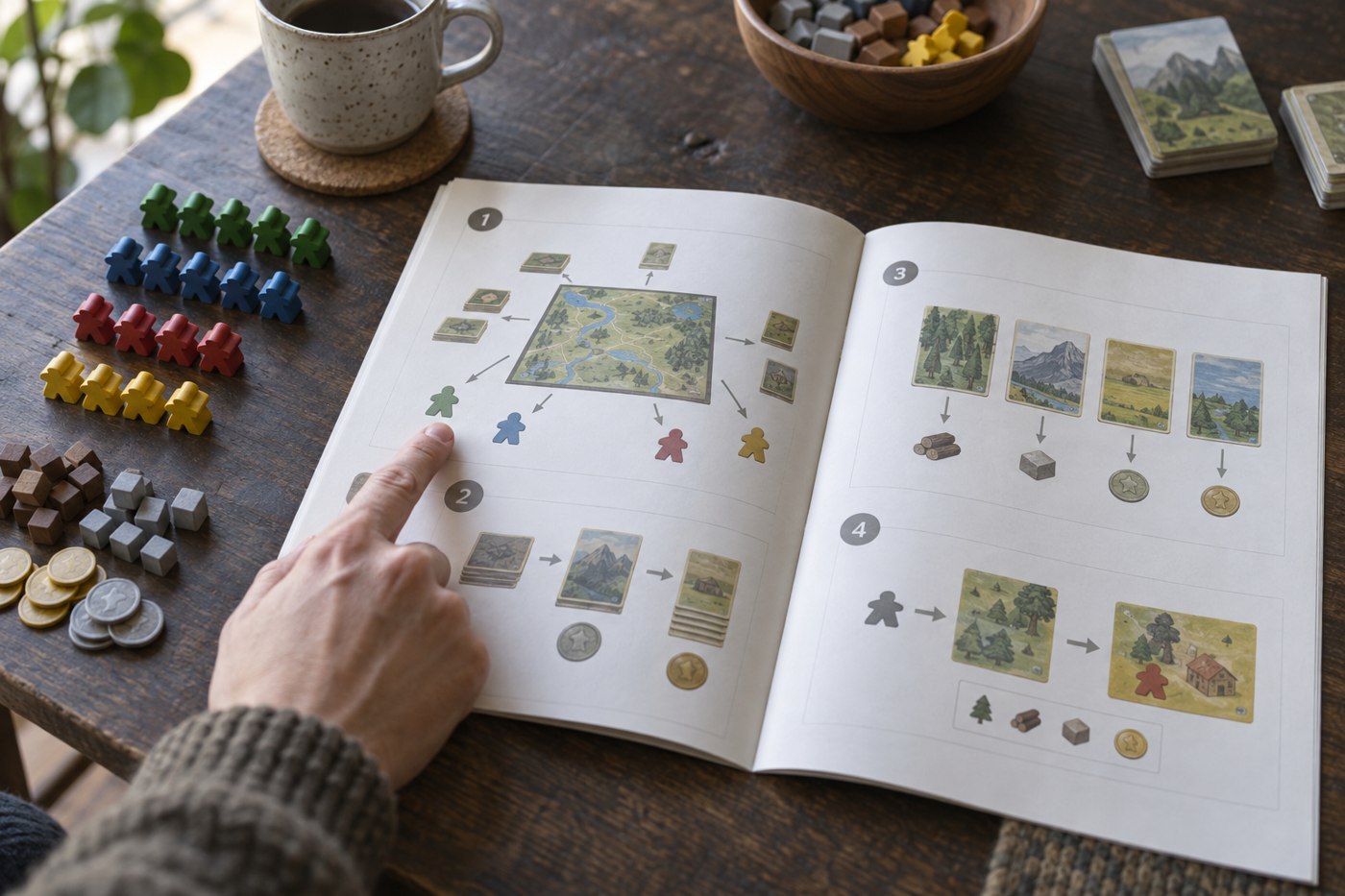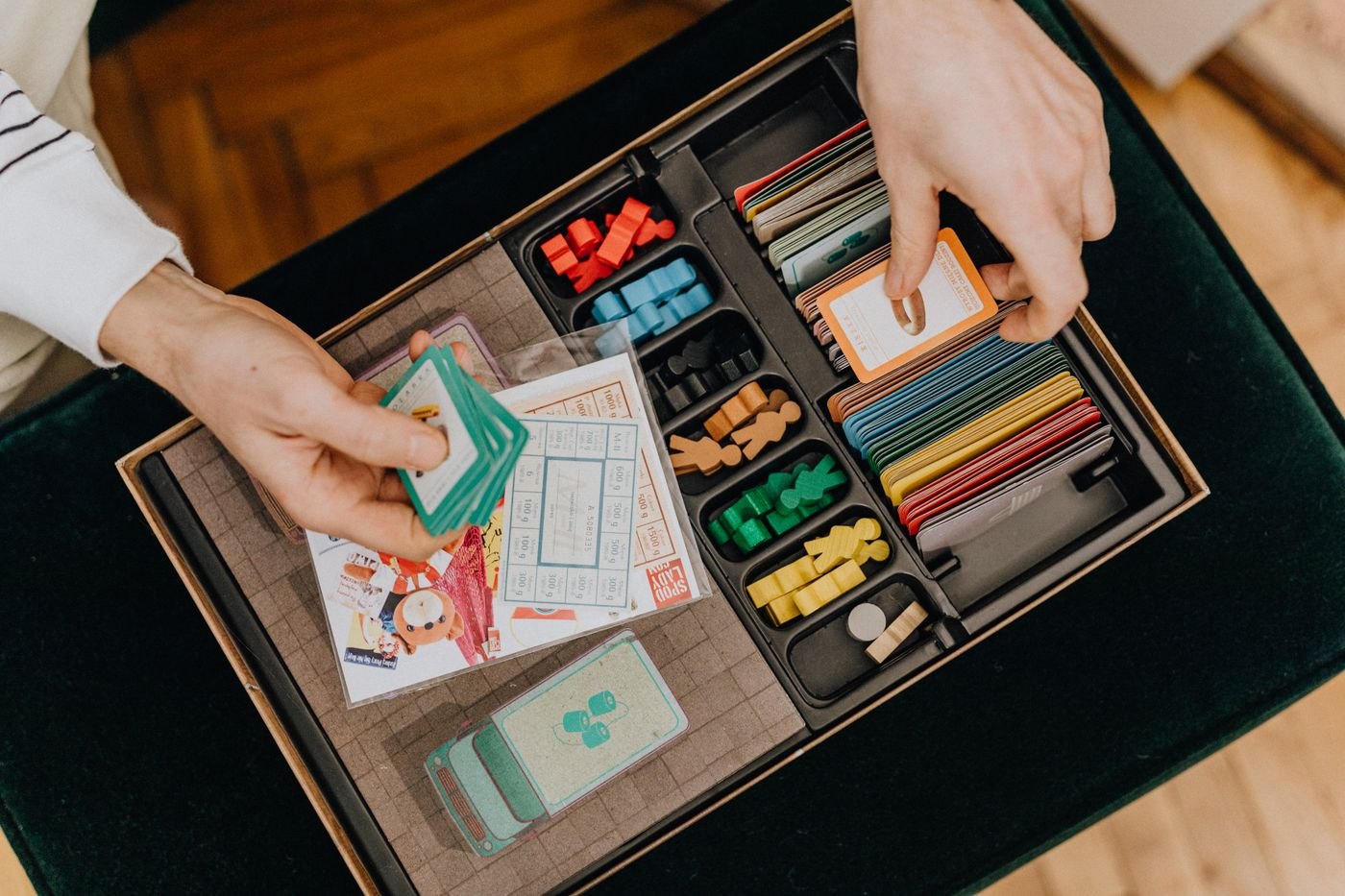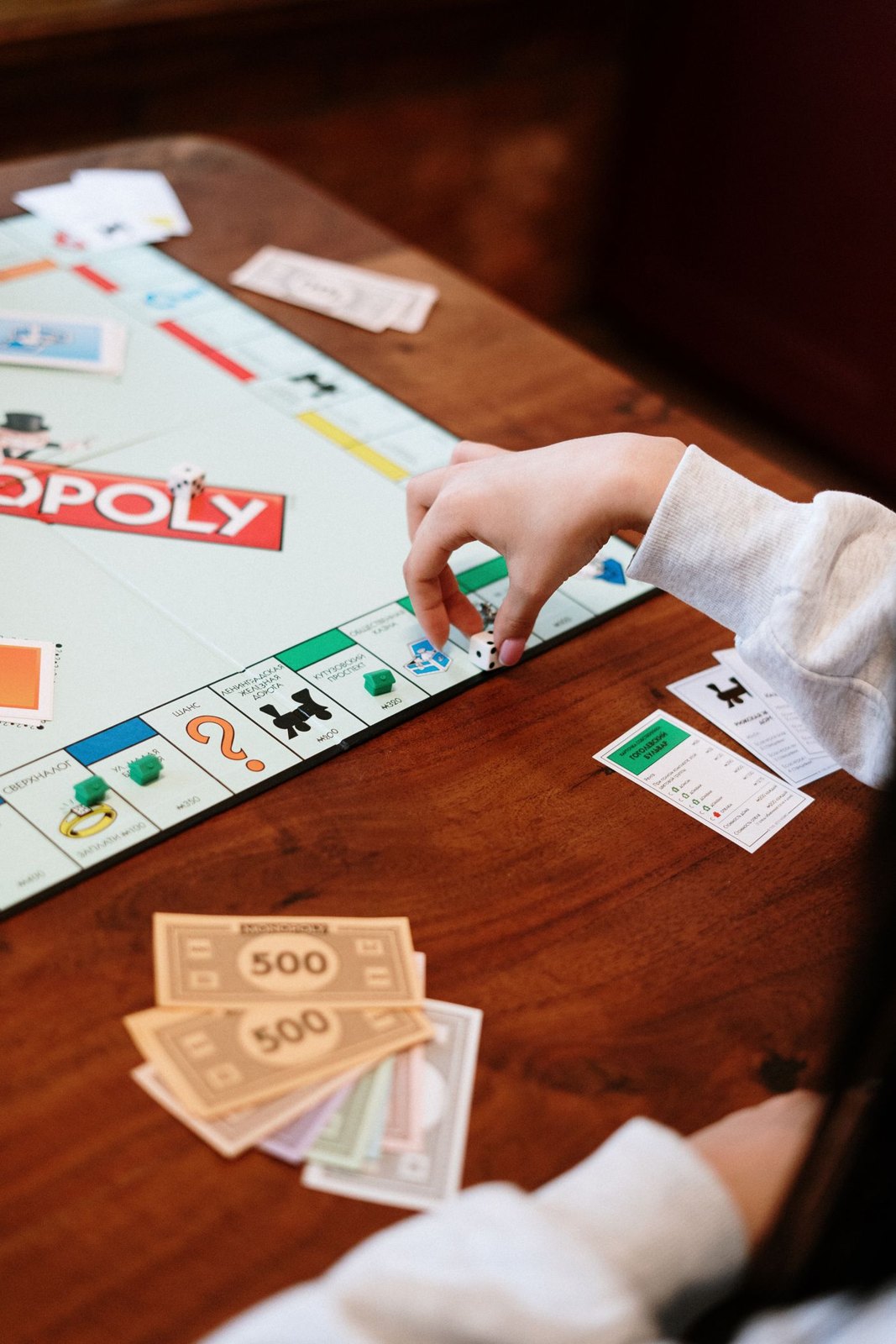
A turn belongs to the active sequence
In many games, a turn is one player's opportunity to act. It might contain a single choice or several actions followed by cleanup. If the rules say to draw at the end of your turn, that usually refers to your own turn, not every turn taken around the table. Confirm the wording rather than interpreting the instruction from habit.
Some games use simultaneous choices, shared turns or an automated opponent. In those systems the familiar clockwise pattern may not apply. Find the rule that identifies who acts next, and notice whether passing removes a player for the round or merely skips one opportunity. These two meanings of pass produce very different decisions.
A round groups a larger cycle
A round often includes a turn for each player, but it can instead continue until everyone passes, all workers are placed or a shared supply runs out. A player may therefore take several turns during one round. Count the cycle using its published end condition, not the number of times the first-player marker has been passed.
Suppose a hypothetical game allows each player to place one worker per turn until all workers are used. Players with four workers may take four turns in the round. An instruction awarding two coins per round would happen once for that entire cycle, not after each worker placement. Writing the distinction on a reference card prevents repeated accounting errors.
Phases divide a sequence into jobs
A phase is a named portion of a turn or round, such as income, actions or cleanup. Read its location in the sequence. An income phase at the beginning of every round behaves differently from income at the start of each player's turn. The word income alone does not establish when it happens.
Follow the order even when several steps seem independent. Refilling a market before resolving an effect may create choices that should not yet exist. Move a spare marker down a printed phase list if the game has a long sequence. Use that reminder to track completed steps, without inventing an extra action or changing the timing.
Check what an effect actually counts
When a card says once per turn, identify whose turn it means and whether its text provides an exception. When it says at the end of the round, wait for the round trigger instead of resolving it after your final personal action. Specific card text may modify general rules, but the rulebook should explain how such exceptions work.
A quick timing question should have a concrete answer: what just ended, who may act now, and which step comes next? If the table disagrees, return to the sequence rather than debating what feels fair. Consistent timing lets everyone plan with the same information.