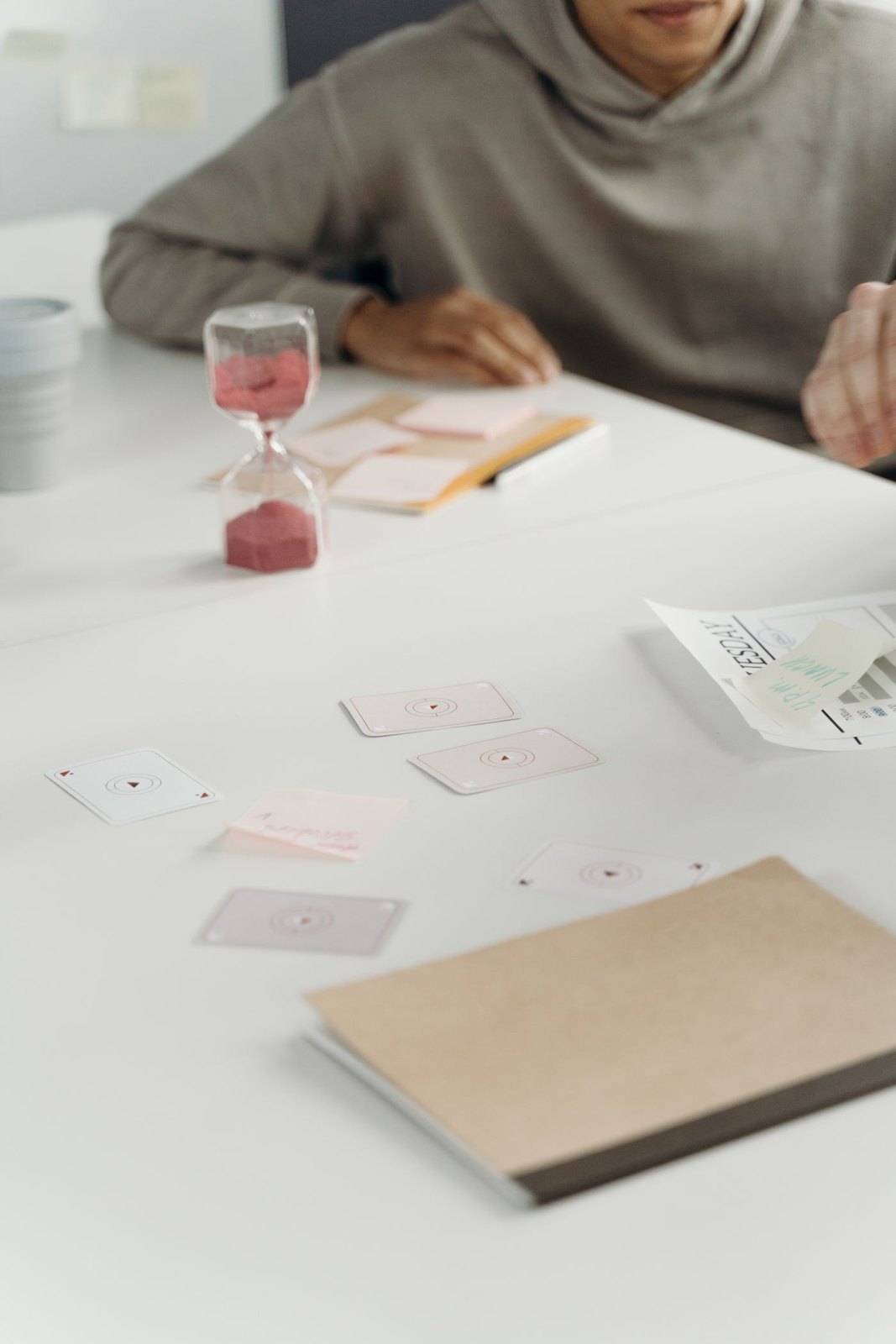
Remove the sound you can control
Pause the television and lower or stop music before explaining. Ask for one conversation at a time and wait until everyone is ready instead of speaking louder over several voices. This gives people a clear signal that the explanation has begun and saves repeating the opening rules to distracted listeners.
Move away from noisy appliances where practical. If a kitchen extractor or dishwasher makes one end of the room difficult to hear, choose a better teaching position. You may be able to explain with a small demonstration near the group before moving to the fully arranged table.
Make speech easy to follow
Face the players when speaking rather than reading into the rulebook. Use the game's terms consistently and point to the component you mean. Pause when someone asks a question, then give the answer to the whole table. Several whispered side explanations often create more confusion than the original interruption.
Ask whether everyone can hear comfortably without singling out a person as the problem. A quieter guest may stop asking questions rather than repeatedly request another explanation. Written player aids can help, but they should complement a clear teach rather than compensate for an unnecessarily noisy room.
Match background sound to play
After teaching, try a low background level only if the group wants it. Negotiation, word games and cooperative discussion may need more audible conversation than a quiet spatial puzzle. Games that use audio cues need those cues to be heard clearly.
If players keep leaning forward, repeating questions or missing turn announcements, lower the volume. The useful test is whether people can participate comfortably, not whether the soundtrack fits the theme.