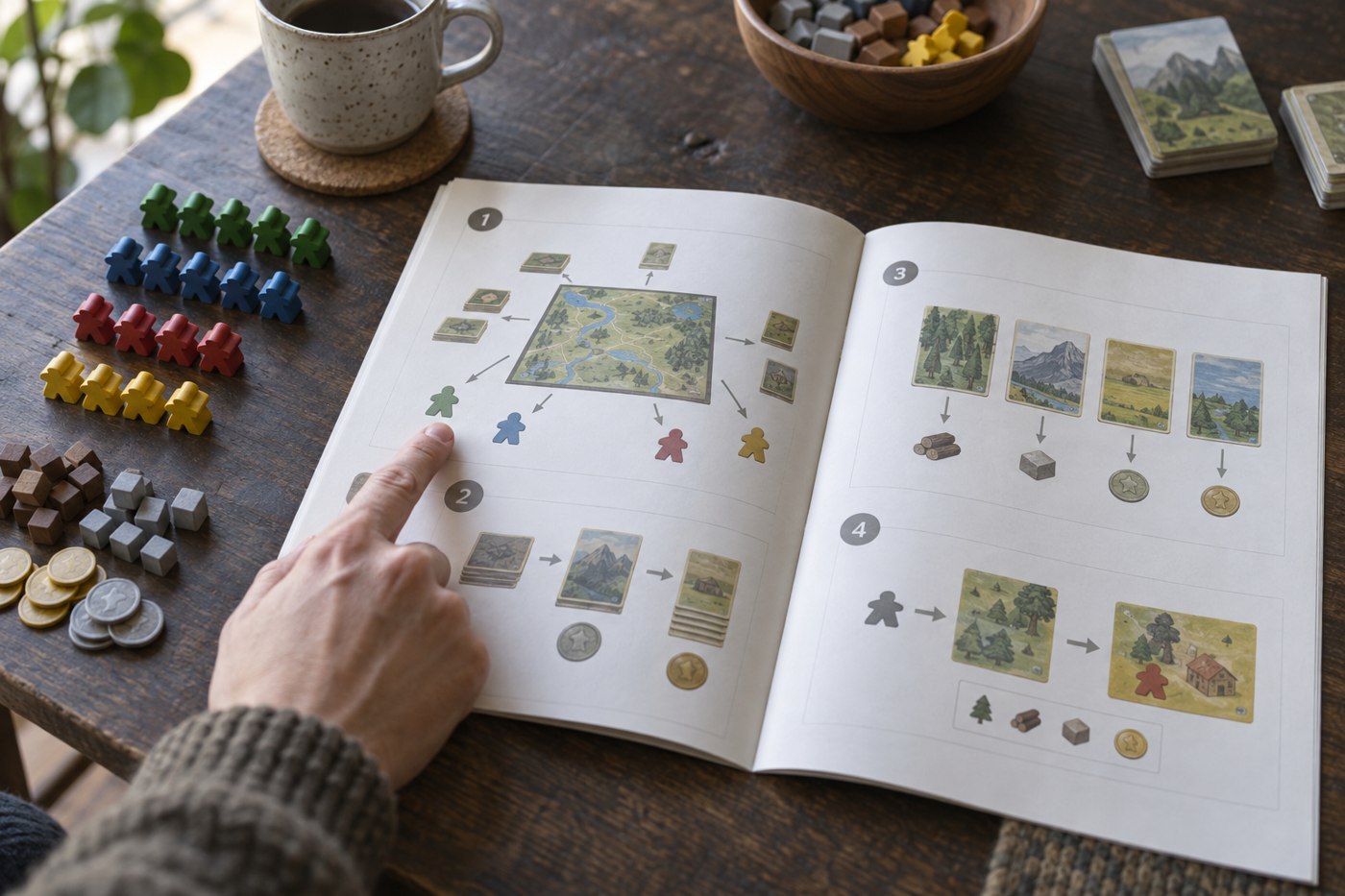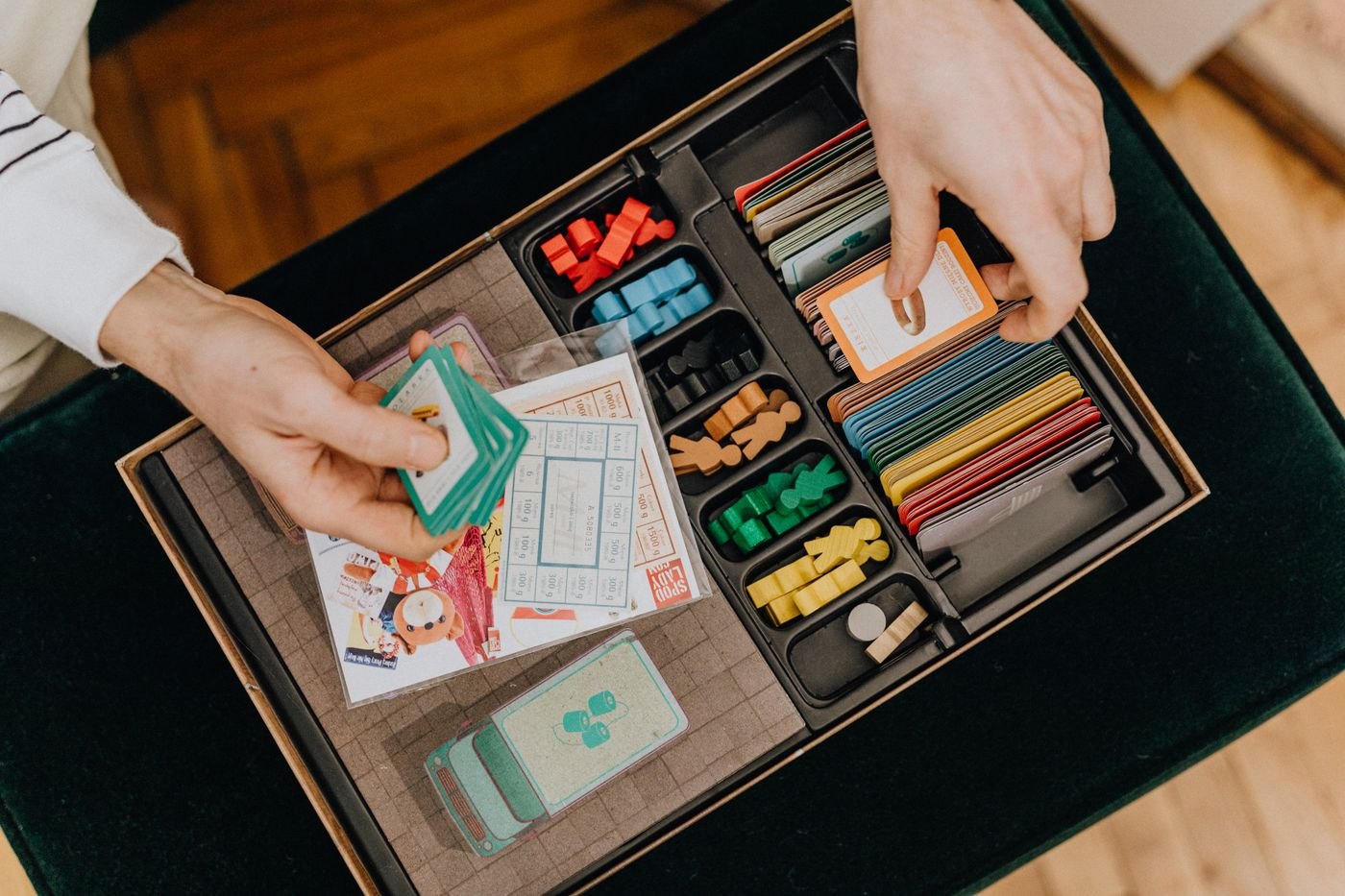
Start with physical differences
Group pieces by shape, size, colour and printed symbol. Turn over a sample from each group to check its reverse. Tokens with identical fronts can carry different values or effects underneath. Keep those groups separate until the setup explains whether the difference should be visible or hidden.
Lay one sample beside the component illustration and compare both the picture and quantity. A near match in colour is not enough if the listed piece has a different shape. Lighting and printing can change how colours appear, so use symbols and dimensions as additional clues.
Assign names after identifying roles
Use the rulebook's labels on temporary paper slips. Distinguish player markers, shared resources, scoring pieces and scenario material. A piece may be used only at a higher player count or with an optional module; unused does not automatically mean spare. Put excluded material back into a clearly separated bag.
For personal supplies, assemble one complete set before repeating it for the other colours. This reveals shortages without scattering nearly complete sets across the table. If players do not receive identical sets, follow the individual setup instructions rather than trying to make every pile equal.
Keep the sorting useful during play
Place shared pieces in shallow containers that allow their values to be read. Do not combine denominations just to reduce the number of containers if players then need to search for every payment. Keep a visible boundary between the bank and personal resources.
After the first session, adjust the bagging to match setup rather than appearance. A player's mixed starting kit may be more useful than separate bags for every shape. Record any unusual grouping on a label so the next person opening the box understands the arrangement.