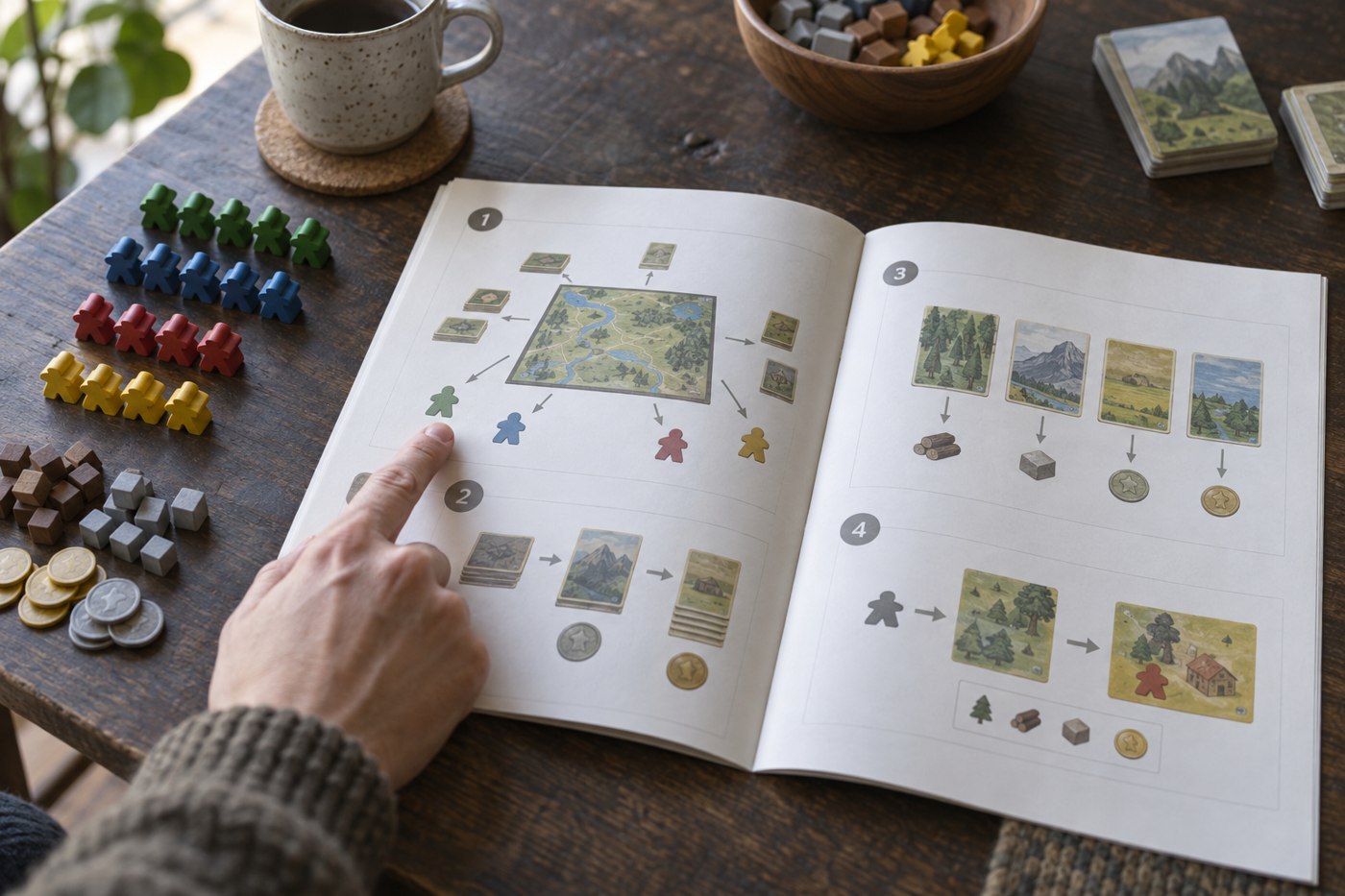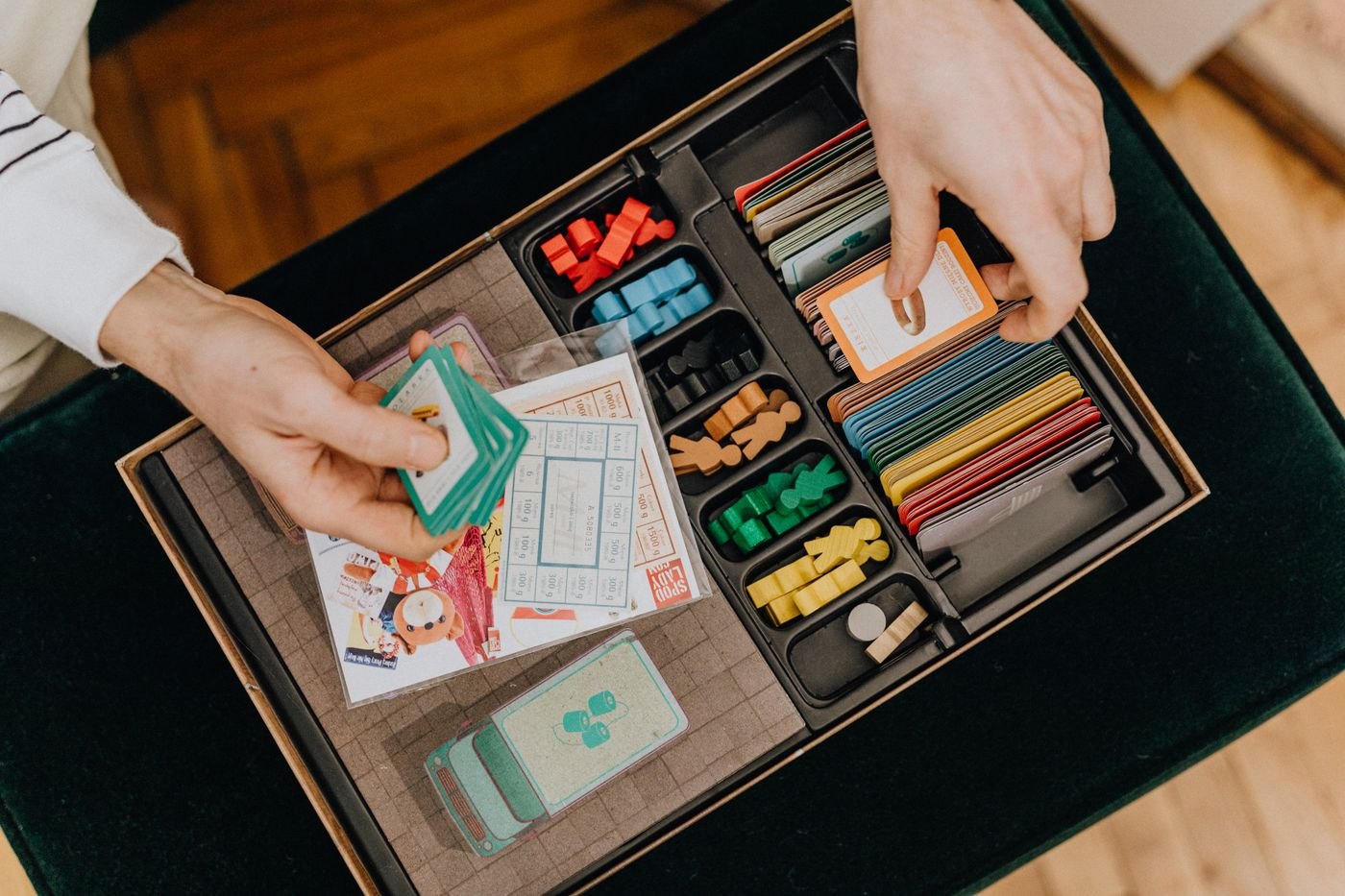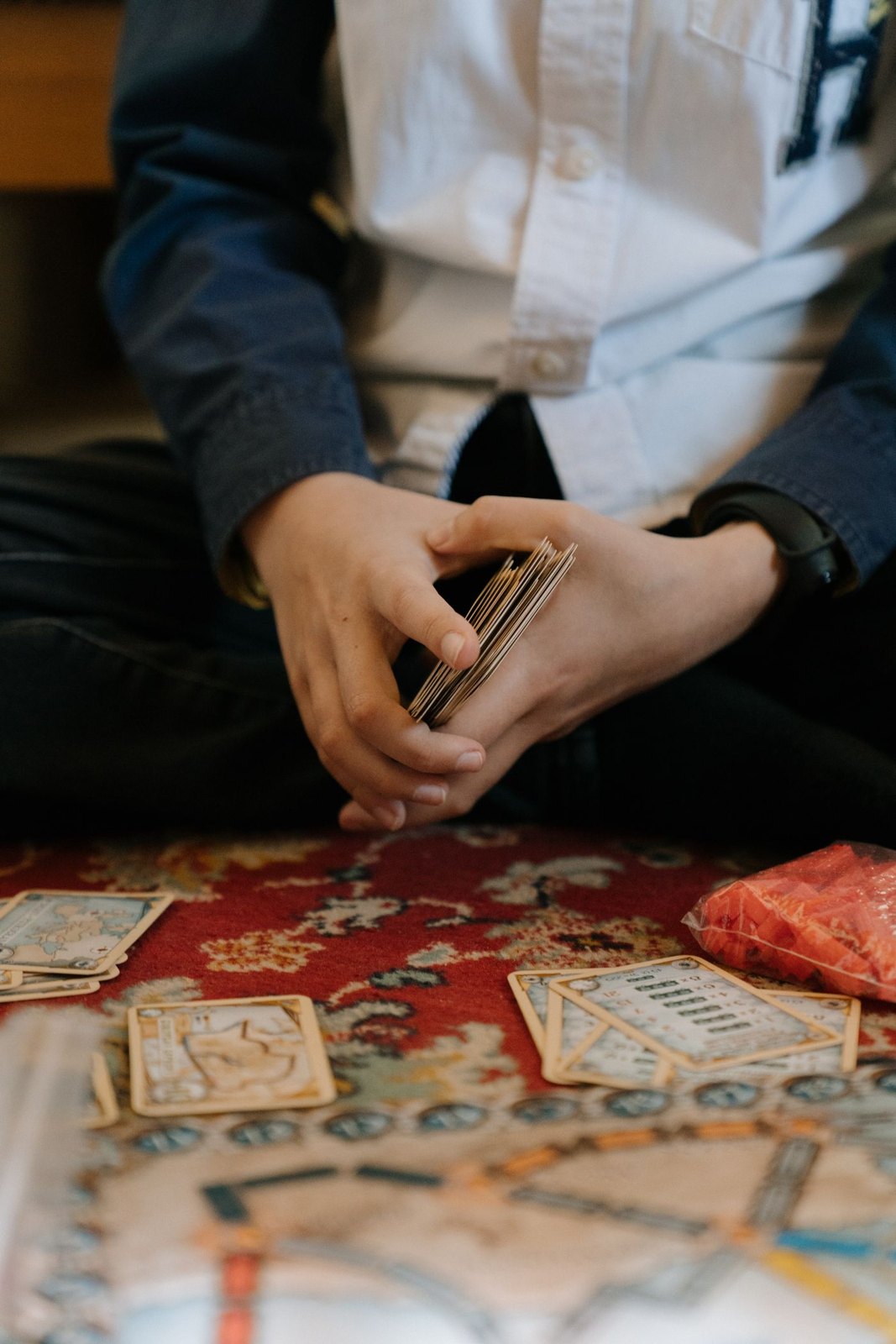
Begin with clean hands and enough space
Use a dry, clean surface and keep drinks away from the shuffle area. Check for cards stuck together, especially in a newly opened deck. Separate them gently at an edge without scraping the printed faces. Make sure reference cards and cards with different backs have not joined the deck accidentally.
If the cards are sleeved, confirm that the sleeves fit and that none are split. New sleeves may slide readily, so work close to the tabletop. A dropped deck is inconvenient; a deck spread into spilled liquid is much harder to recover.
Use small packets rather than force
For an overhand shuffle, hold the deck loosely and move small uneven packets from one hand to the other. Repeat while varying packet size and the points where you take cards. Avoid gripping tightly enough to bow the stack. No fixed number of casual shuffles guarantees a random order, so do not treat a ritual count as proof.
A gentle wash on a suitable clean surface can mix a small set of cards without bending them: spread them face down and move them around before gathering. Consider surface friction and card finish first. Do not drag delicate cards across a rough table, and take care that no faces become visible during gathering.
Treat sorting and randomising differently
Dealing cards into neat piles is useful for counting, but a predictable pile pattern alone is not a reliable substitute for shuffling. If you use piles to check the deck, mix it afterwards with an appropriate method. Follow any preparation rule that separates card types before combining them.
Avoid using a bending riffle simply because it looks familiar. It can be unnecessary for a small board-game deck and may mark cards over time. Sleeved cards may permit a gentle interleaving technique, but stop if corners catch rather than pushing them together. Handling comfort matters more than speed.
For an unusually shaped deck, test the grip with only a few cards first. Large square cards or long narrow cards may not sit comfortably in the same hand position as playing cards. Support their full width and change methods if the edges repeatedly catch or the stack begins to curve.