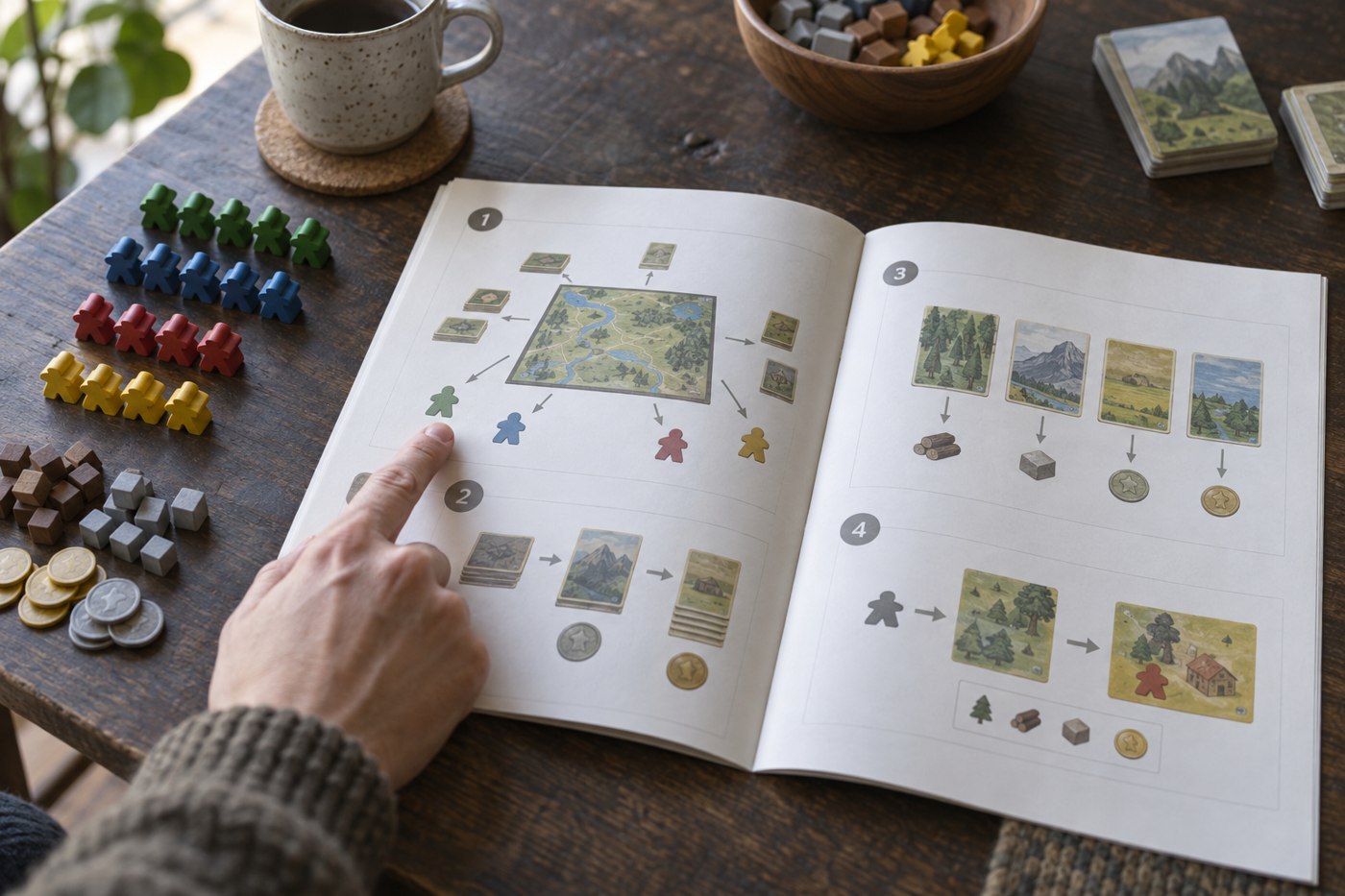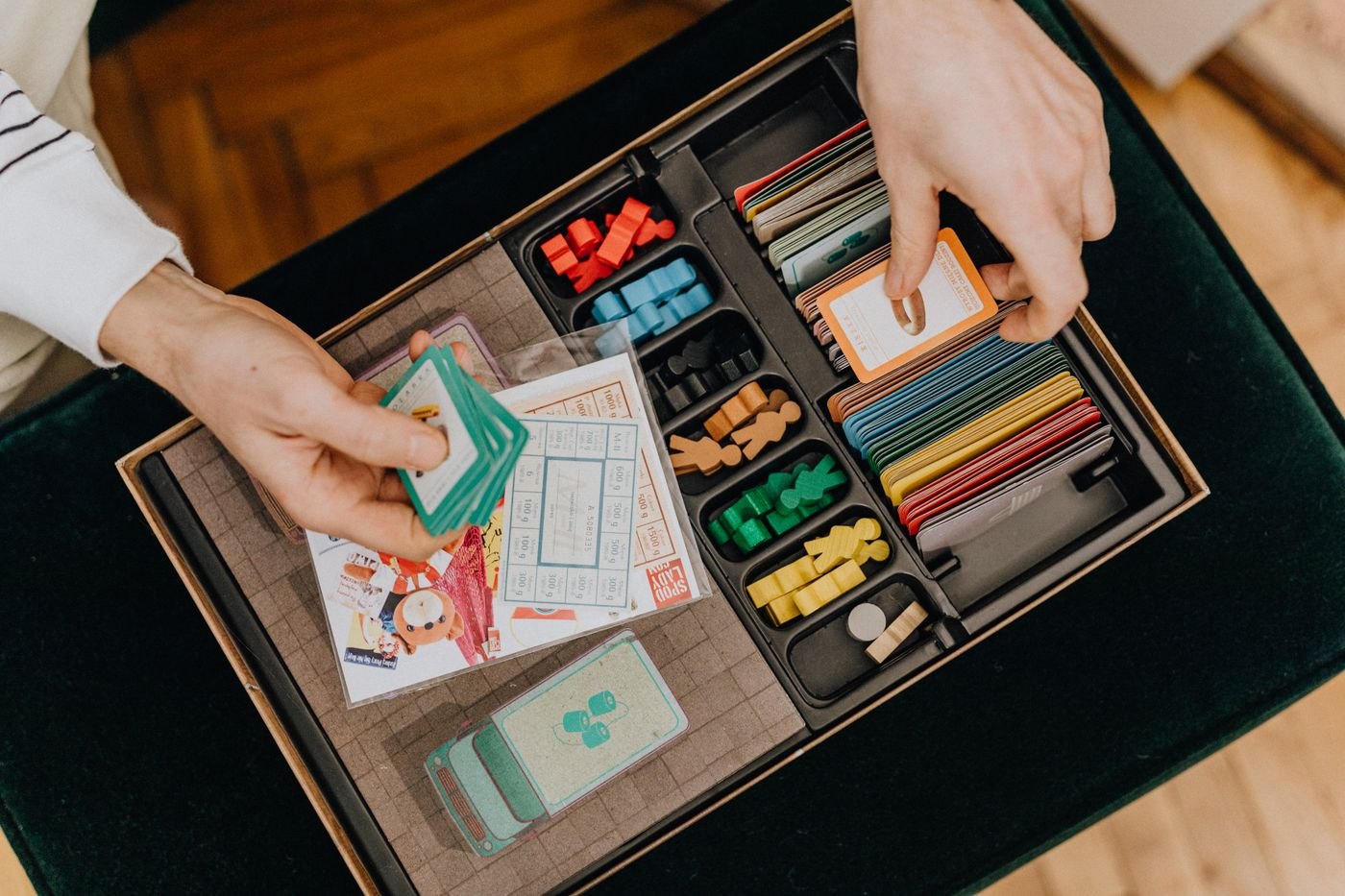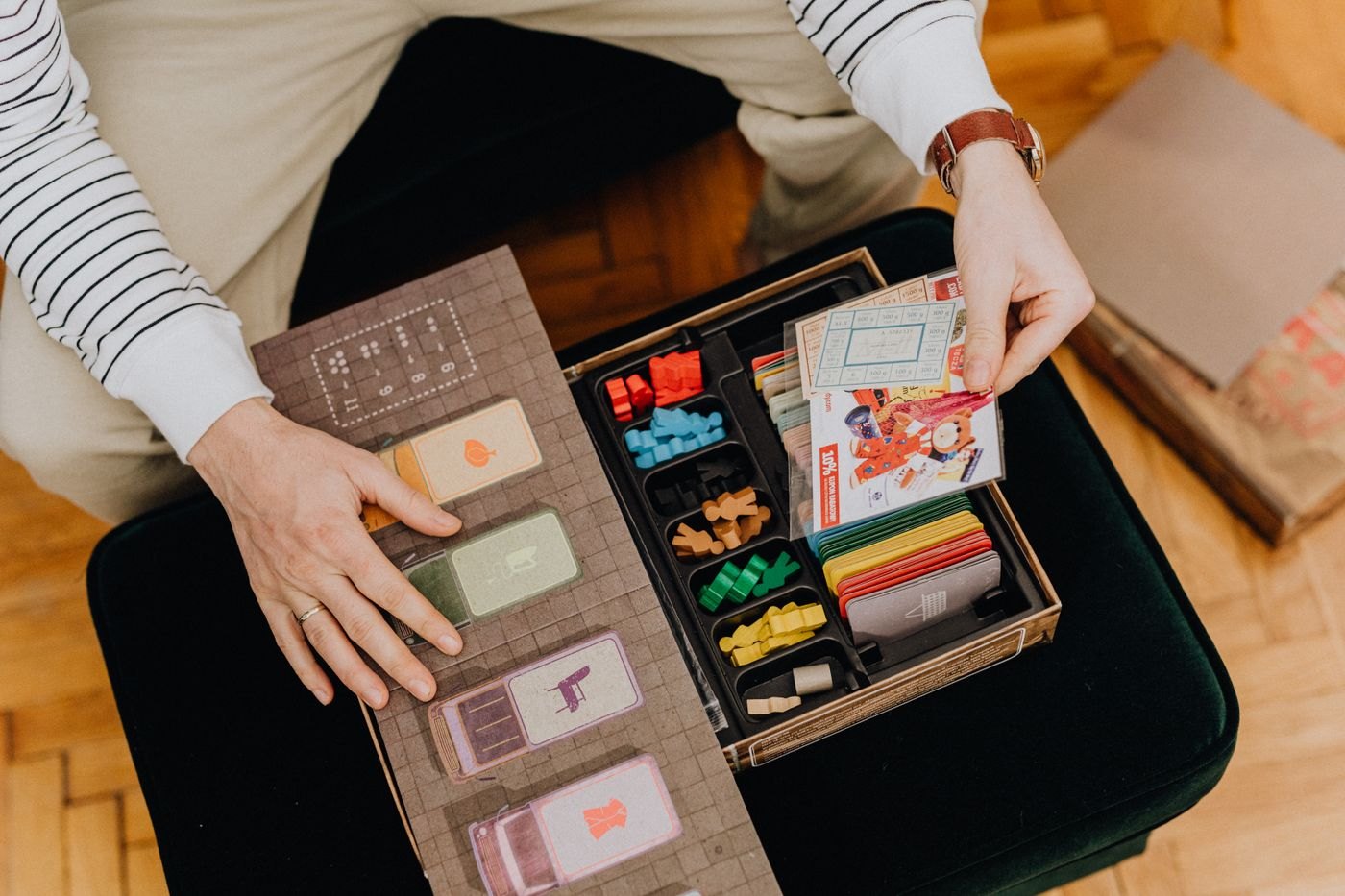
Check before discarding
Remove loose packing material slowly and inspect folds or gaps for small components. Keep the box, insert and printed sheets nearby while checking the component list. A sheet that looks promotional may also carry setup instructions or a code needed for the intended game experience. Read it before deciding whether to keep it.
Look for instructions on sealed packs and envelopes. Do not open numbered or spoiler-marked material simply to complete a visual inventory. You can usually count sealed items without revealing their contents. Follow the game's stated opening sequence when the packaging is part of the play experience.
Sort without changing the decks
Separate obvious component types, but preserve card order until the rules say to shuffle. Photograph a prearranged pack if its organisation appears intentional and the contents are not secret. Keep different card backs apart, even when their fronts use similar artwork. Mixing them creates avoidable work during setup.
Punch only the boards intended for immediate use and inspect the reverse sides before discarding the frames. Some games print labels or reference information on material that resembles waste. Retain the empty sheets until you have confirmed the component count and first setup.
Pack for the next step
Use temporary bags or trays for identified groups. Avoid writing permanent labels until you know the printed names. Keep anything unexplained in a small separate bag rather than guessing that it is a spare. Compare the complete contents with the list once more before clearing the packaging away.
If an item is missing or damaged, note its exact name and take a clear photograph of the issue. Keep purchase details available for the seller or publisher. The relevant replacement process may vary, so check their instructions before mailing anything.