Match the video to your edition
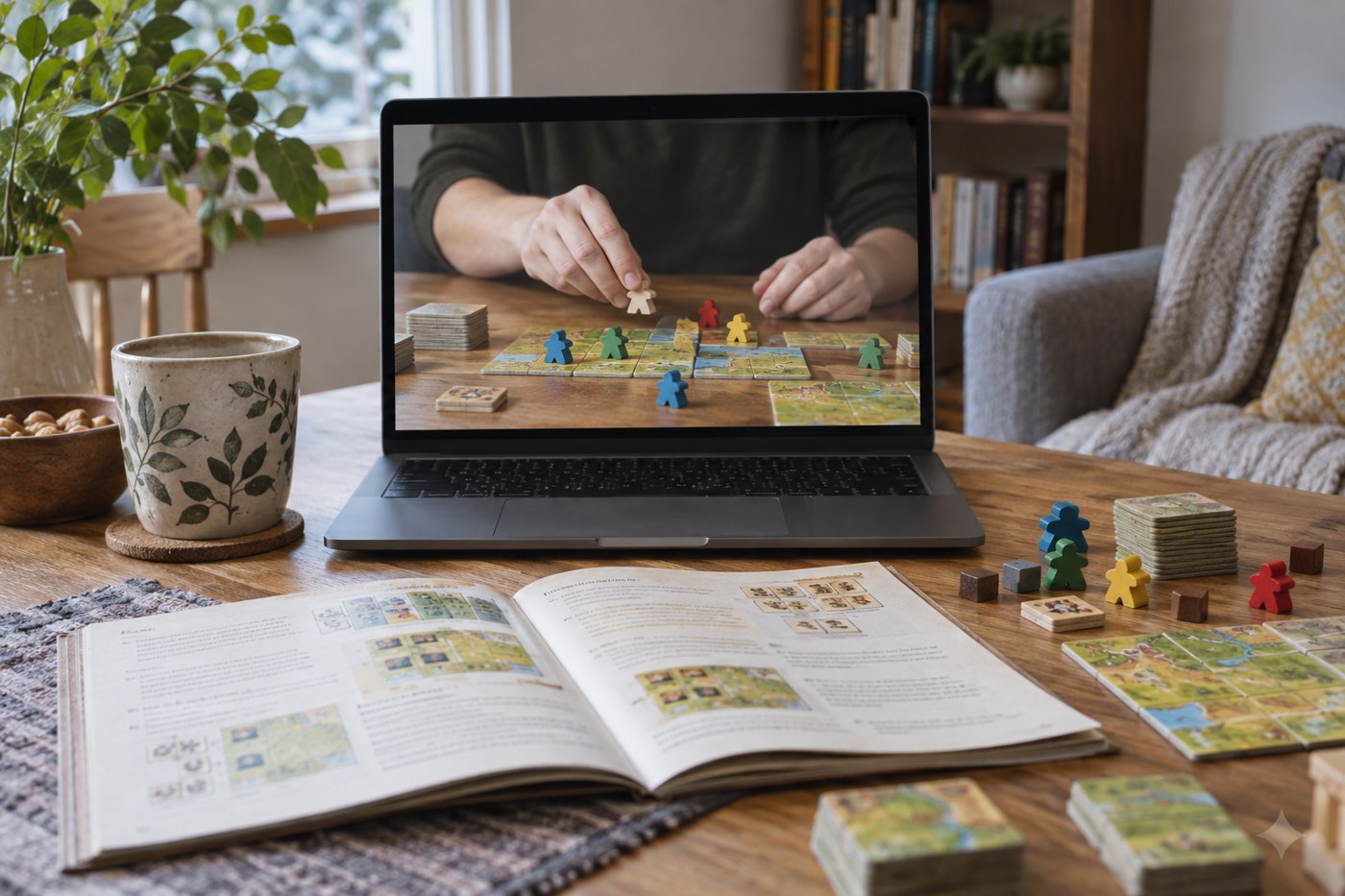
Confirm the title, edition, language and included expansions before following the setup. A video may demonstrate an earlier printing or an optional module without making that difference obvious in every segment. Compare the boards and card backs with your box. If the components differ, investigate before treating the instructions as interchangeable.
Prefer a publisher demonstration or a clearly identified rules explanation for initial learning. A playthrough can be useful later, but it may assume prior knowledge and include unnoticed mistakes. Check whether the description supplies corrections. The confidence of the presenter does not establish that every detail is current.
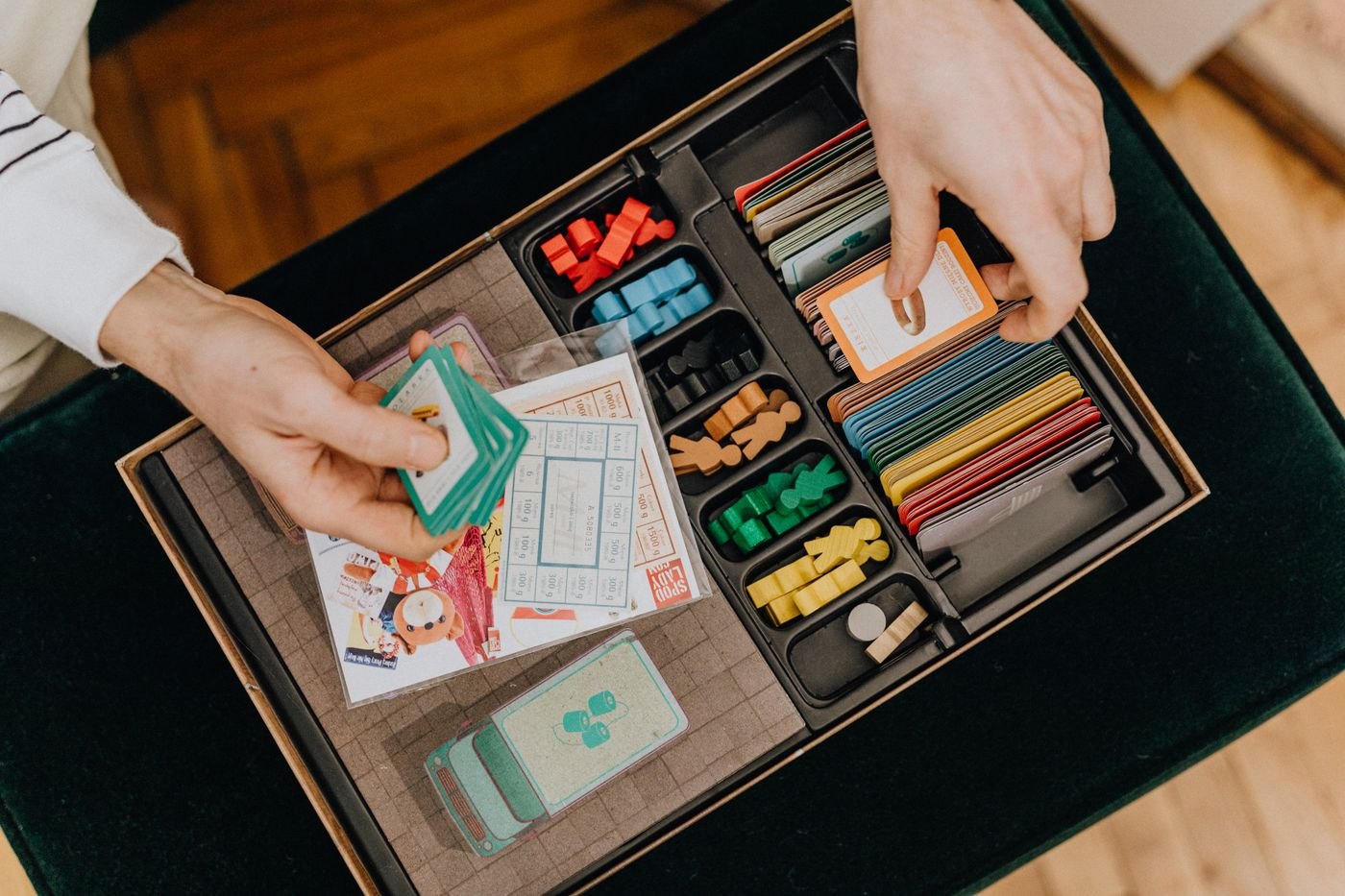
Watch with the components nearby
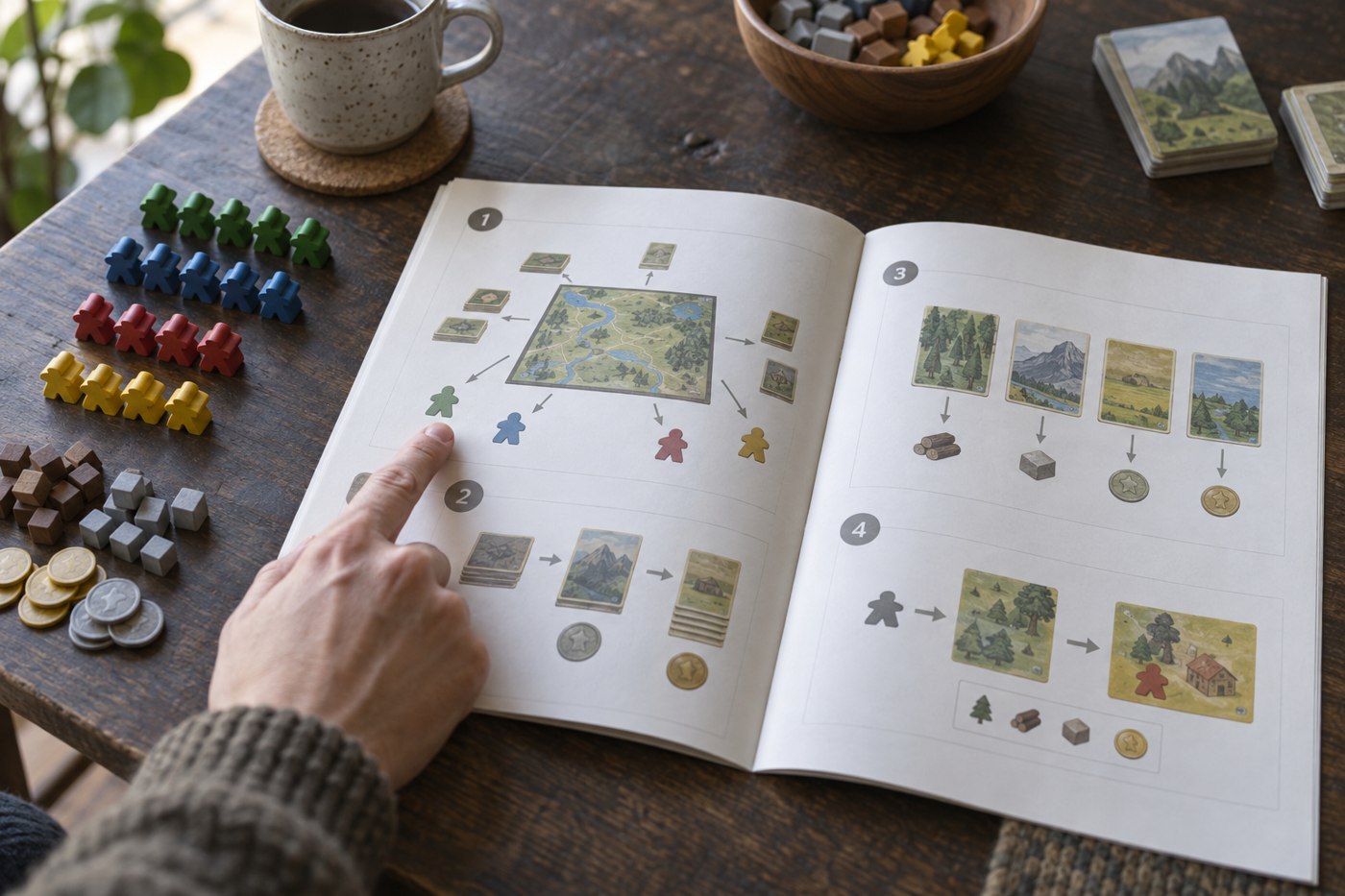
Pause after setup instructions and reproduce the arrangement. Move a sample piece when an action is demonstrated. This turns passive watching into a check of whether you know which component is being discussed. Keep the rulebook open to the corresponding section so you learn where to find the information again.
Record questions using the game's printed terms, along with the video timestamp if helpful. Do not repeatedly rewind a passage whose wording remains ambiguous. Read the full rulebook paragraph and any example beside it. A video may simplify a statement to preserve the flow of the explanation.
Verify the consequential details
Check the game end, scoring, action limits and recurring cleanup against the printed rules. These details affect plans throughout a session. If the video and book disagree, look for an official correction for that edition. Avoid blending whichever parts seem easiest into a new unannounced variant.
After watching, try one ordinary turn without replaying the clip. If you cannot complete it, identify the missing step and review that section. You do not need to watch the whole explanation again to resolve a single destination or timing question.
Prepare for the table
Send a video to interested players as an optional preparation aid, but do not assume everybody watched it or retained it. Give the table a brief shared explanation before beginning. This prevents some players from starting with a different understanding while others are reluctant to admit they need help.
Use playback speed cautiously for unfamiliar terminology. Faster speech may save a few minutes while making card names and timing qualifications harder to distinguish. Once the main structure is familiar, a faster review can be useful; during the first pass, pause wherever an action needs a physical demonstration.