Check what supports the weight
A lid can span an empty space inside its box. Heavy objects above it may therefore load the centre of the lid rather than a solid supporting surface. Look at the condition of the box and avoid placing concentrated weight on a visibly bowed or weakened lid.
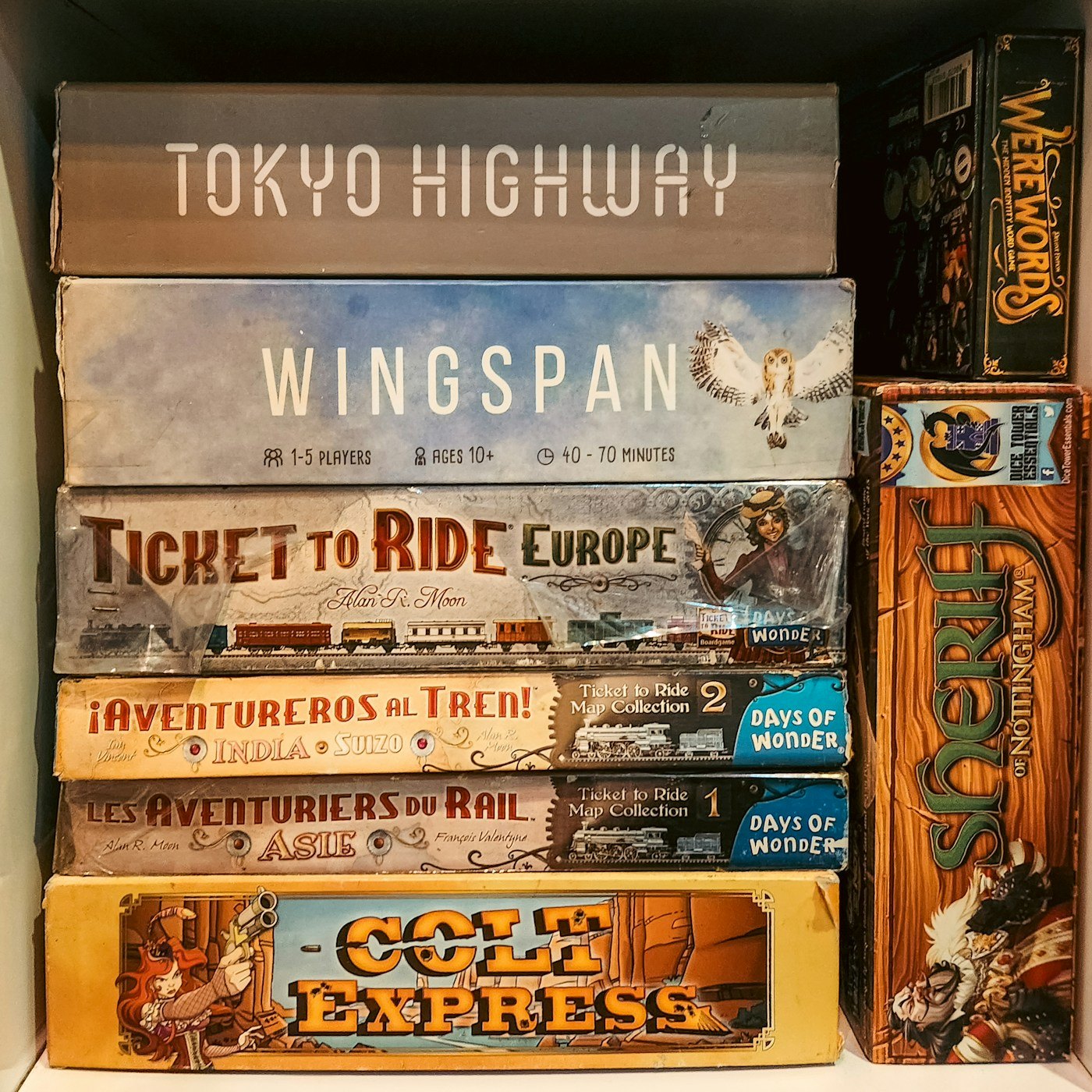
Do not use a small hard box as a pressure point on a much larger unsupported one. Matching footprints can make a stack more orderly, but they do not prove that the lower boxes can carry the load. Keep stacks modest and use shelf space to distribute the collection where practical.
Make frequently played games accessible
If the game you use most sits at the bottom, every session begins with moving several other boxes. Place frequent choices near the top or on a separate shelf. Less-used titles can occupy positions that require more handling, provided the arrangement remains safe and comfortable.
Leave room to lift a box without scraping it against the shelf above. Avoid pulling a lower box sideways while the full stack remains on top. Move the upper boxes to a clear stable surface first rather than balancing them in one arm.
Inspect for early signs of pressure
Look for dished lids, crushed corners and seams beginning to split. A new mark can be a reason to change the arrangement before more damage appears. Do not hide a weakened box at the bottom because its appearance is less noticeable there.
Keep games away from unsuitable damp or hot storage conditions. A box affected by moisture should not be treated as structurally unchanged simply because it has dried on the outside. Address the storage location as well as the order of the stack.
Respect the shelving itself
The combined weight of games matters to the shelf, not only to the boxes. Use the furniture’s stated loading and securing guidance. A stack that looks small can contain dense components. Distribute storage deliberately instead of continuing to add games to whichever compartment still has a gap.