Measure the card, then read the label carefully
Measure an unsleeved card's width and height in millimetres, keeping it flat against the ruler. Repeat with a card from each visibly different deck. Record the measurements beside the card count so that a small reference deck does not get confused with the main draw deck.
Look for the manufacturer's supported card dimensions. The outside sleeve dimensions are different. For example, Gamegenic lists an inner sleeve measuring 64 × 89 mm for cards up to 63 × 88 mm. Buying solely by the larger printed number can therefore lead to the wrong fit. Names such as standard, mini and euro are useful categories, but the stated measurements are the deciding detail.
Try one before opening every pack
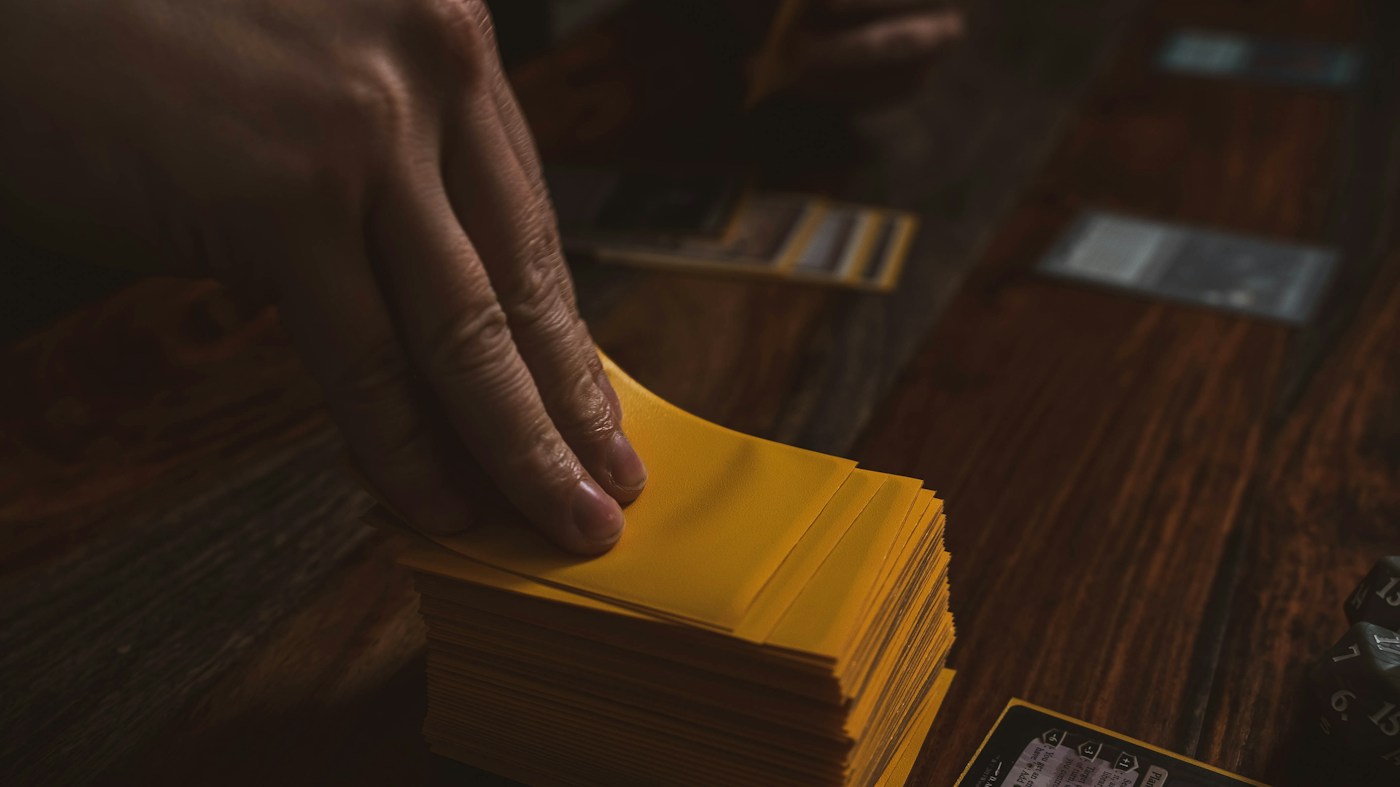
Slide a card into a sample slowly. It should enter without bowing, and its upper edge should remain protected. A tight fit that bends the card is not improved protection. A very loose sleeve may allow the card to move around and make a deck awkward to handle. Do not force a corner through a resistant opening.
If you intend to use two layers, check that the inner and outer sleeves are designed to work together. An inner sleeve is not automatically the best single sleeve for routine shuffling. Ask for a sample at a shop or buy a small pack first when the dimensions are close or the cards are unusual.
Check the whole deck, including storage
Count how many cards of each size actually need protection, then check the quantity in the chosen packet. Keep a few matching spares for split sleeves. If card backs carry information, choose transparent backs; opaque sleeves could hide something players are supposed to see.
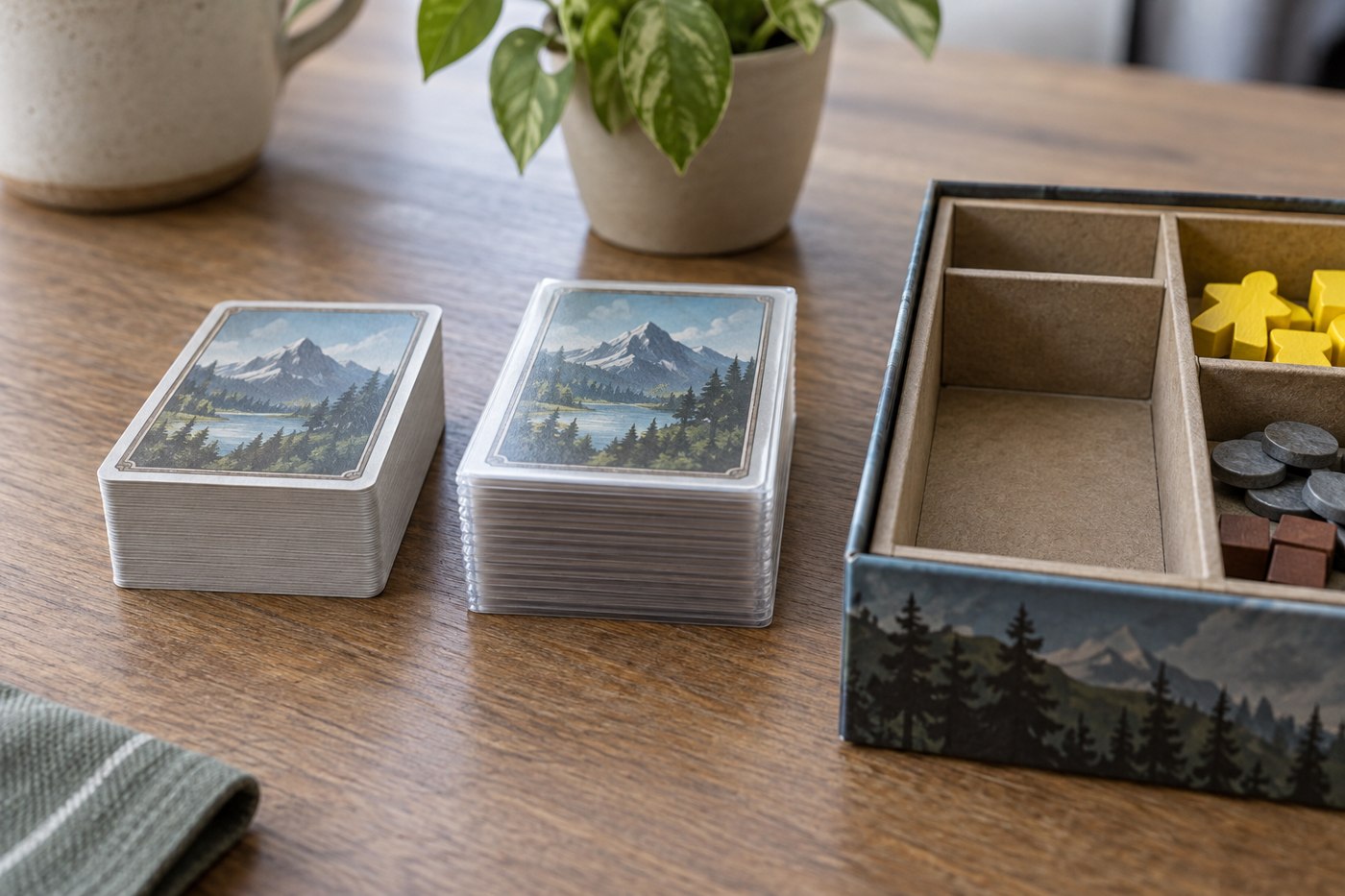
Sleeve a short stack and test it in the insert before committing to the full game. Added width and thickness can stop a deck fitting its well or closing inside a card box. Also test handling on your playing surface: newly sleeved cards may slide more readily than bare cards. Storage fit and comfortable shuffling matter alongside the measurement on the packet.