Find out who will join them
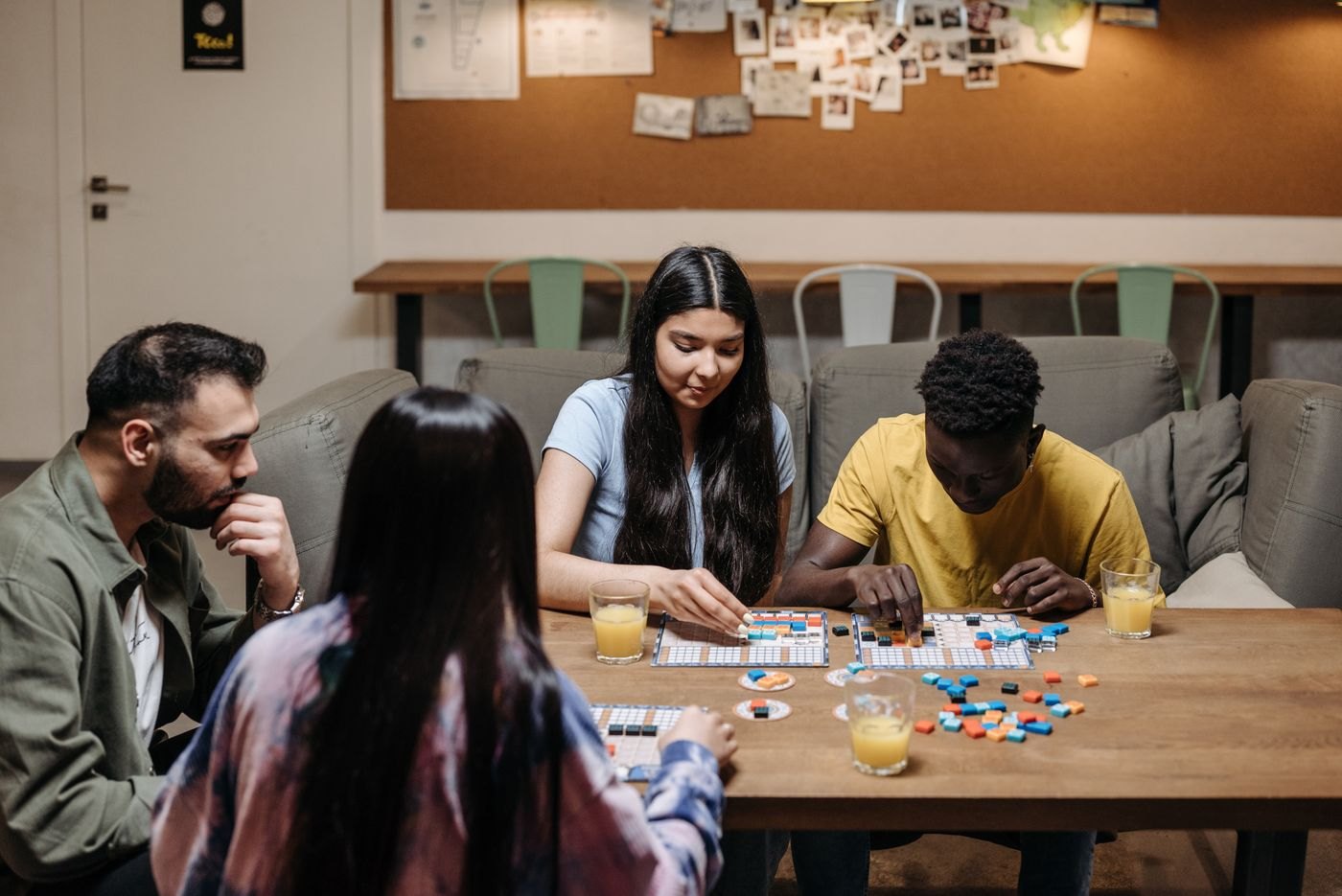
Ask how many people usually play and whether that group is regular or occasional. Someone who hosts large gatherings may still spend most evenings with one partner. Choose for a likely use rather than the most impressive possible event. Check the intended player count in the rules, including any special mode required at that count.
Consider the other players' reading needs and preferences too. A gift for one person often becomes an activity for several. A text-heavy game may be a poor fit for a multilingual family, while a confrontational game may not suit a group that prefers shared puzzles. These are matters of taste and access, not measures of gaming ability.
Learn from games they already enjoy
Ask what they like doing in a favourite game. It may be building combinations, telling stories, bluffing or simply finishing a satisfying session in half an hour. The answer is more informative than the theme or box size. Two games about the same subject can involve completely different activities.
Check what they already own, including expansions and alternate editions. A current wishlist can help, but confirm the exact product before buying. Similar titles may refer to a base game, an add-on or a standalone version. Avoid assuming that a larger or more expensive edition is automatically the desired one.
Check time and teaching expectations
Think about when the game will be learned. A gift that needs substantial preparation may remain unopened if the recipient usually relies on someone else to teach. A clear introductory mode and manageable setup can matter more than a large amount of content. Do not promise that a game is easy based solely on a short description.
If you plan to play the gift together, learn enough to explain it accurately, but let the recipient decide when to open and use it. Turning the presentation into an immediate required session can create pressure. The gift should offer an activity rather than schedule the recipient's evening without their agreement.
Inspect language and physical demands
Confirm the language of the actual components. A rules translation does not solve unique text on cards. Look at font size, icon contrast and the amount of table space required. If the recipient has mentioned a particular access need, use that information directly rather than guessing what will be manageable.
Check storage as well as play. A large box or sprawling campaign can be inconvenient in a small home. Extra accessories may be unnecessary if the recipient already has a preferred storage method. Give a complete usable game first; add sleeves or organisers only when you know the exact sizes and their preferences.
Keep uncertainty manageable
If you cannot identify a suitable game confidently, a agreed shortlist or a choice made together can still feel thoughtful. You can preserve the surprise in the presentation while letting the recipient select the activity. There is no need to turn limited information into an expensive guess.
When buying, read the seller's actual gift and return conditions and retain the relevant receipt. Do not assume an opened game has the same return options as an unopened one. Avoid writing directly on the game box if that would complicate an exchange or the recipient's preferred storage.
Make the personal part specific
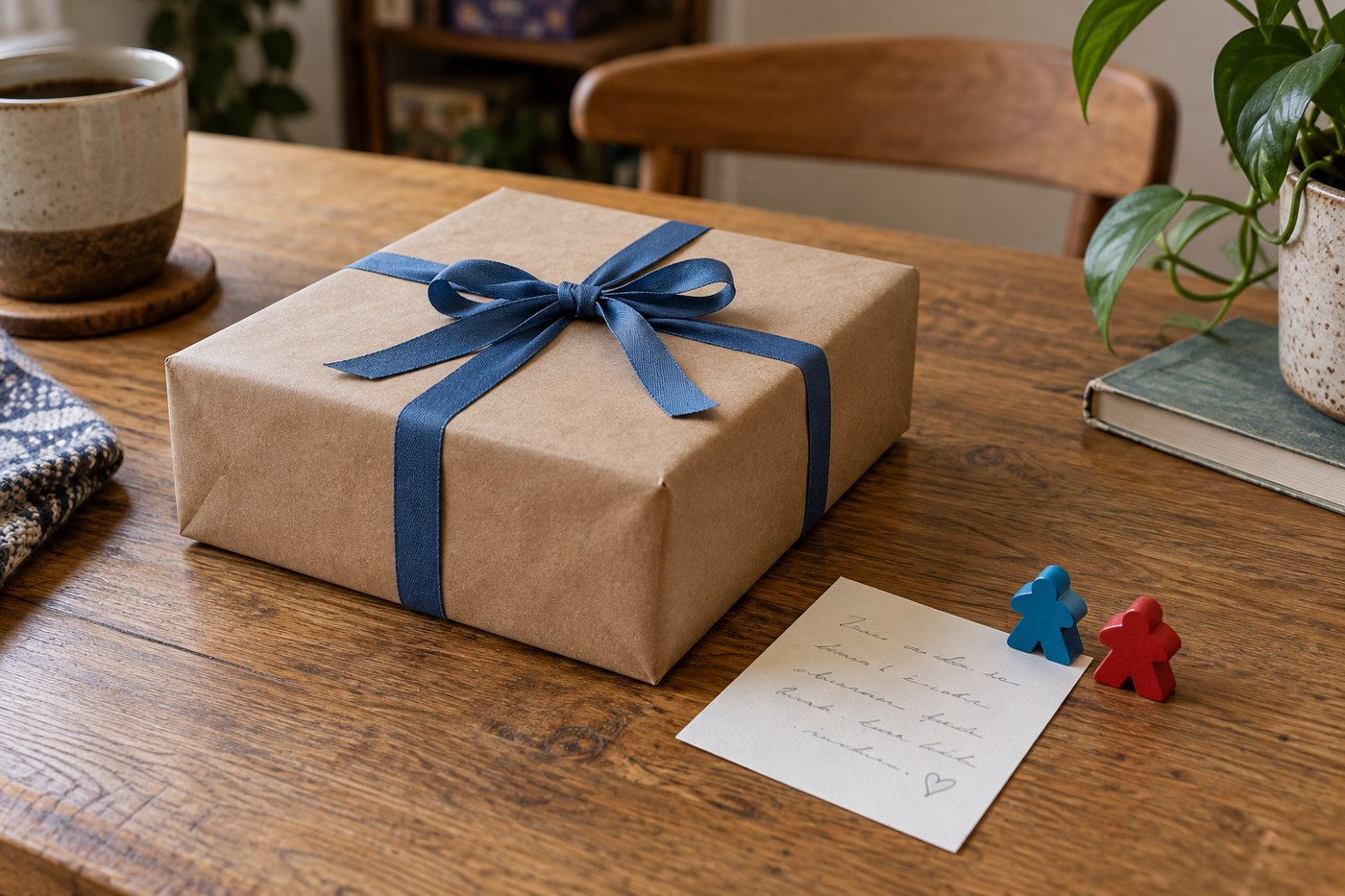
A short note can explain why you chose the game: it fits the two-player evenings they mentioned, or offers the sort of shared puzzle they enjoy. Keep the claim modest and tied to what you know. There is no need to call it the perfect game or promise that every future gathering will love it.