Name the people who will actually play
Count the usual players, not the largest gathering you could theoretically host. A game bought for six may spend most evenings with two people available. Check the published rules for both counts, including whether fewer players require a dummy participant or a different mode. Supported numbers alone do not describe how the experience changes.
Ask about preferences in concrete terms. Does the group enjoy direct competition, a shared puzzle, bluffing, storytelling or quiet planning? Someone who dislikes being attacked may still enjoy competing for points. Someone who enjoys a quick card game may not want a long negotiation. Avoid treating all newcomers as having the same taste.
Work out the complete time window
Include setup, explanation, play and packing away. A printed playing time should not be treated as a promise for a first session with unfamiliar players. Look at the rulebook to see how much preparation the game requires and whether it has a shorter introductory arrangement. Choose a session with enough space for questions.
Consider how the game ends and whether it can pause. A fixed number of rounds is easier to schedule than an open-ended race whose length varies with player choices. If people often leave at different times, inspect what happens when somebody departs. A game that depends on every participant staying until the finish may be unsuitable even when its average duration looks manageable.
Inspect the work players will do
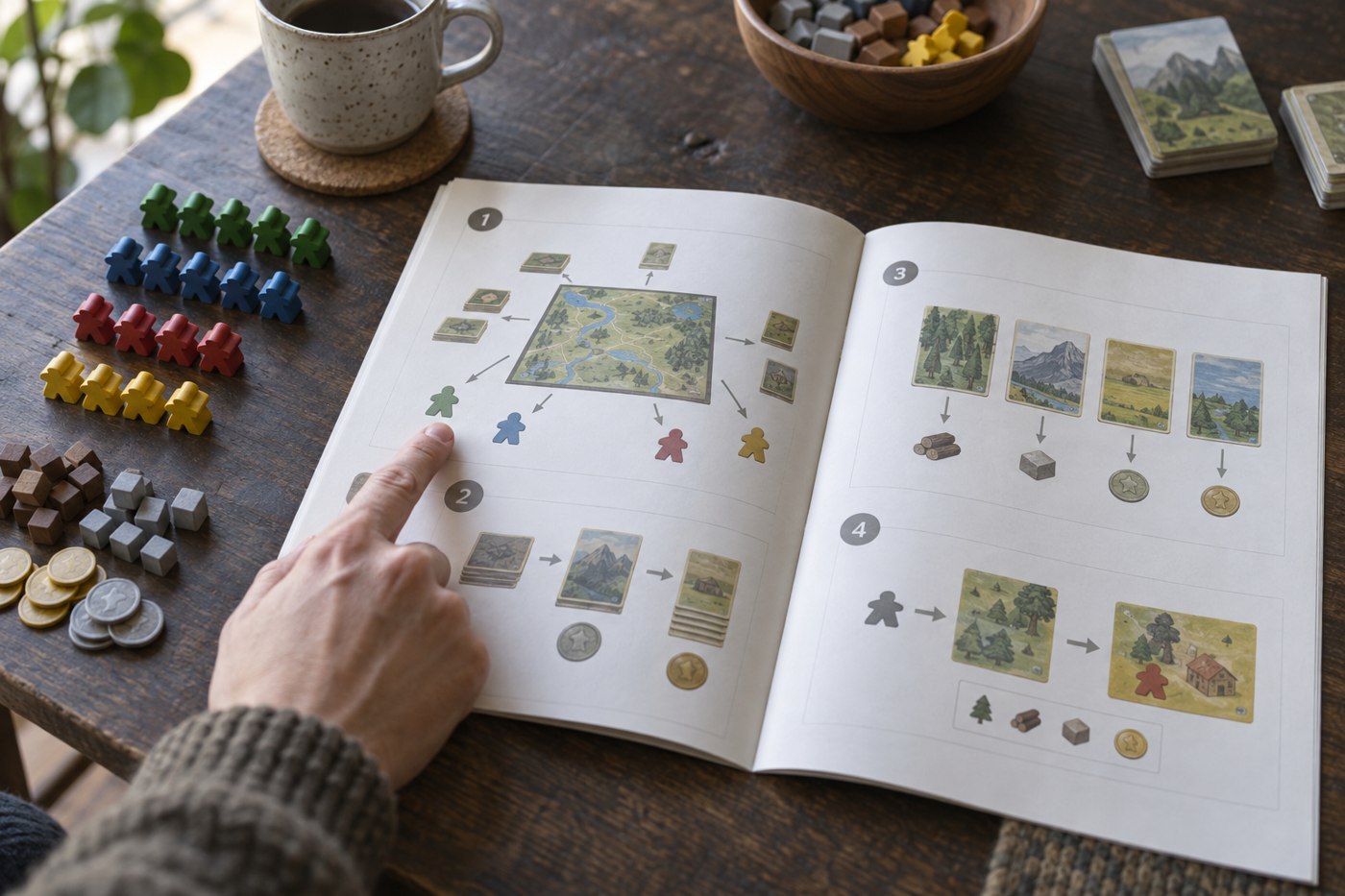
Read a turn summary or watch a small portion of a rules demonstration. Notice whether players read private card text, remember many exceptions, calculate values or manipulate small pieces. These demands are different from strategic depth. A simple action can create a difficult decision, while a long rulebook can still lead to relatively straightforward turns.
Check language and accessibility with the people involved. Large colourful pictures do not guarantee that the cards are readable across a table. A symbol-heavy game may still need repeated reference to a key. If colour distinguishes players or resources, look for accompanying shapes or labels. Ask about needs directly rather than guessing from age.
Look at the real playing footprint
Measure the available table and compare it with a fully developed game, not just the central board. Personal displays, discard piles and market rows need space too. Leave room for hands and a clear edge around the playing area. A compact box can contain a game that spreads widely once cards accumulate.
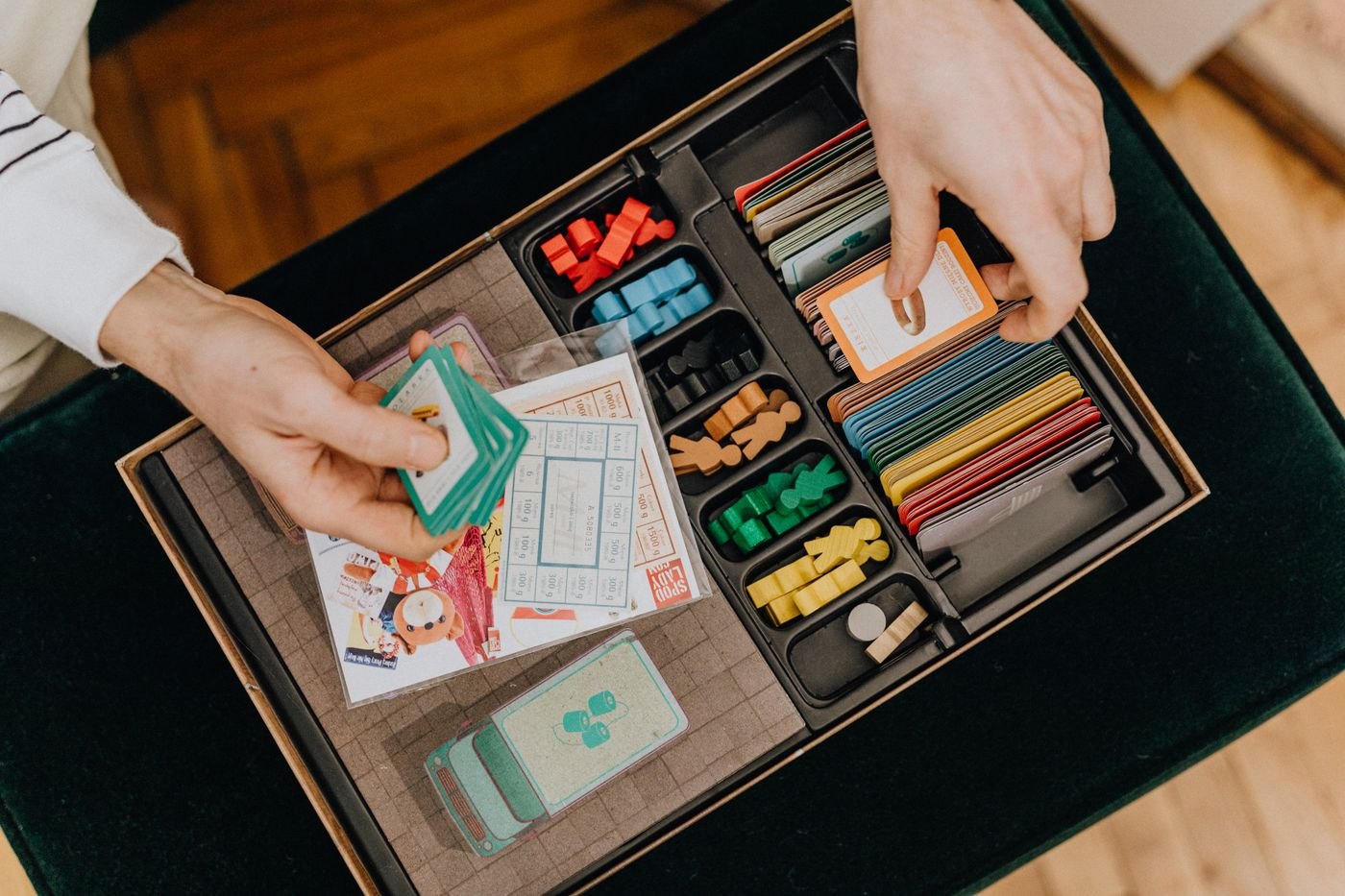
Think about storage after purchase. Will the box fit on its intended shelf, and can the components be returned without an elaborate sorting process? Extra organisers are optional costs rather than automatic requirements. For a first game, straightforward setup and storage can matter more than elaborate pieces that are attractive in photographs.
Confirm the exact product
Check that the item is a playable base game or explicitly standalone product. Expansions can have similar titles and equally substantial boxes. Confirm the language, edition and included materials on the publisher's product page or rulebook. A retailer's brief title may omit information that matters to compatibility.
If buying used, compare the contents with the correct component list and ask about missing pieces, marked cards and any permanent campaign changes. A low price is less useful if the game needs replacement parts that are difficult to obtain. Do not assume another edition has interchangeable cards simply because the artwork looks similar.
Try a small amount of play if possible
Borrowing, visiting a game library or joining a demonstration can answer questions that written descriptions leave open. Pay attention to what you enjoy doing during the turns, not only whether you win. Notice the waiting time and how often you need help finding a rule. One session is a sample, not a final verdict on every possible strategy.
If trying is impractical, use the publisher's rules to eliminate obvious mismatches and choose one game that fills a clear role. You do not need an entire collection immediately. Play the first purchase several times, then use what you learn about the group to decide what a second game should add.