Choose the level of detail
For a simple game, a checked copy of the official component list may be enough. A game with several expansions or scenario packs may need a separate record for each module. Keep the base game identifiable so you can verify it without opening every expansion group.
Record edition and language beside the title. A later printing can change component counts or names. If you create a list from a borrowed rulebook or a web page, confirm that it describes your copy rather than assuming the title alone is sufficient.
Count logical groups
Separate player sets, common resources, cards and scenario-specific material. Use the names printed in the rules where possible. A label such as “small green pieces” may be hard to interpret later if several components share that description.
For cards, decide whether a total count is adequate or whether unique identifiers matter. You do not need to list every card title for every game. More detailed records are useful where a missing specific card changes a scenario or where several decks look alike. Avoid recording spoiler-sensitive material in a document meant to be shared before play.
Connect the list to the packing system
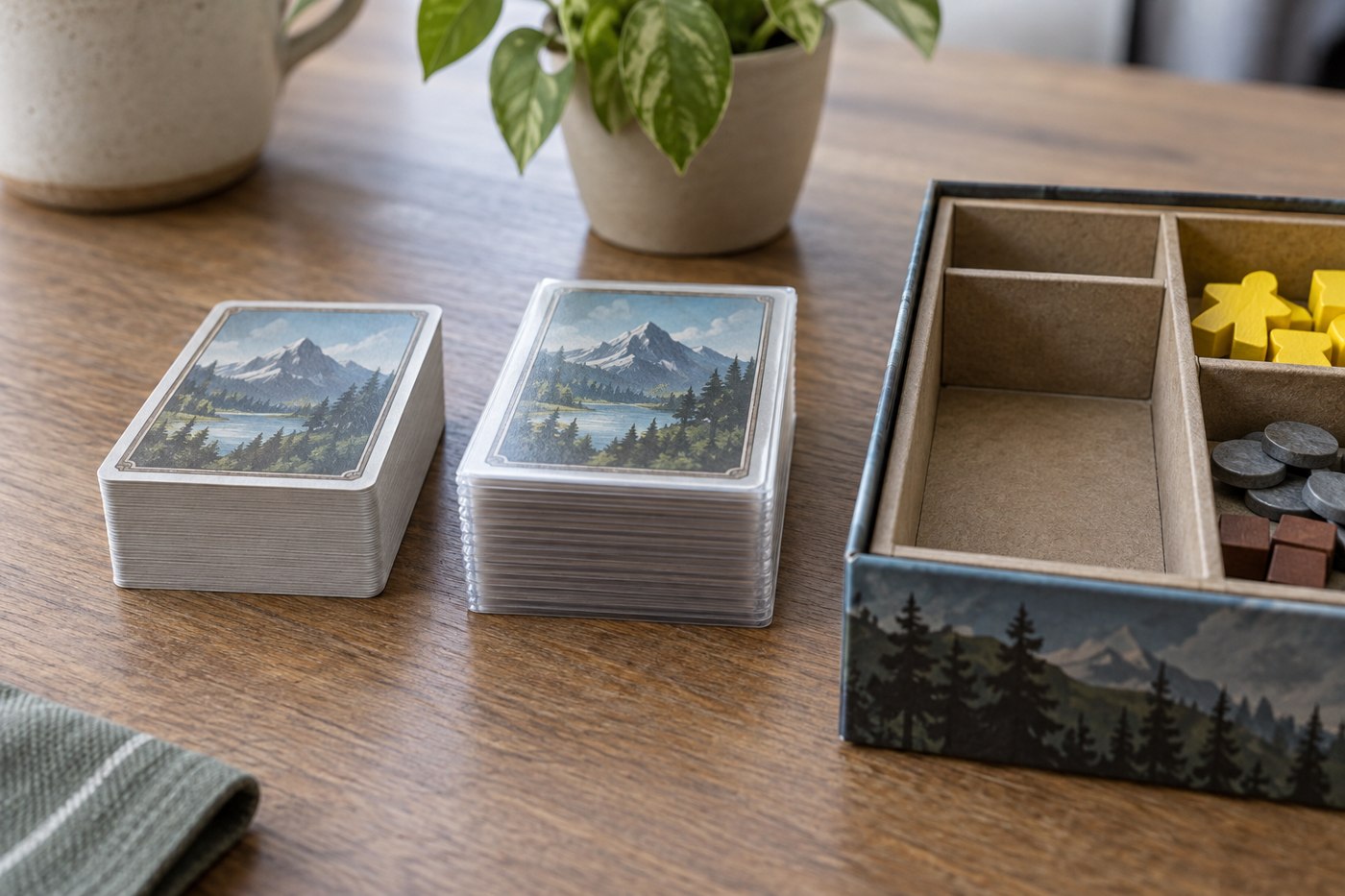
Add the bag or tray location when it helps setup. Keep those references understandable: “blue player bag” is more useful than “bag 7” unless the bags are visibly numbered. A photograph of a complete compartment can support the written list, especially for unusual shapes.
Do not rely on a photograph alone for exact counts when pieces overlap. Combine an image of the arrangement with the quantities that matter. Store the record somewhere easy to find, such as with the rules or in a clearly named personal file.
Make updates deliberate
When adding an expansion, record it as an addition rather than quietly changing the original base-game total. Note any official replacement components that supersede earlier versions. Keep obsolete pieces separated if you retain them, so the next count does not mistake both versions for required contents.
If a piece is temporarily missing, mark that clearly and remove the note when it returns. A permanent-looking inventory should not silently mix confirmed counts with guesses. Use a short “to check” entry where uncertainty remains.
Use the inventory at useful moments
Check completeness after a loan, before selling a copy or when repacking a complicated collection. Counting every cube after every short session may be more work than the group needs. A quick scan of labelled compartments can be enough for ordinary use, with a full count reserved for meaningful checkpoints.